

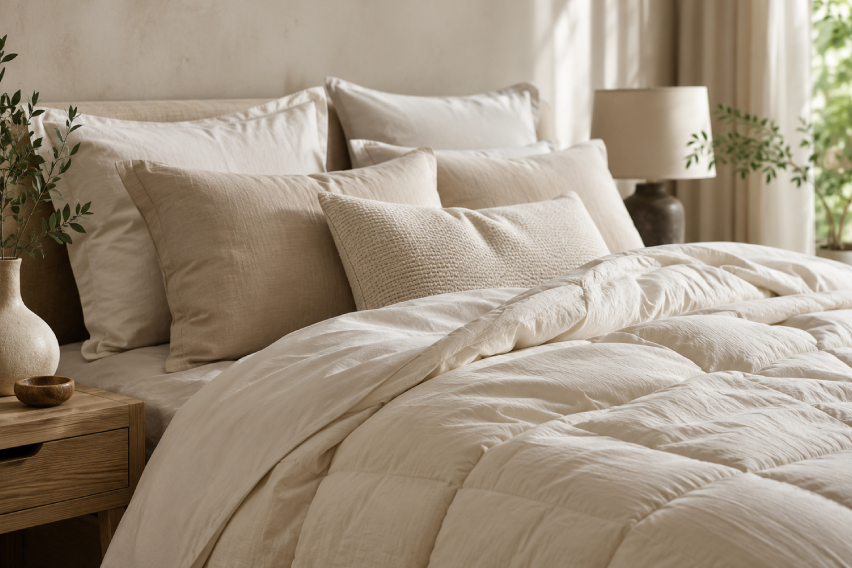
Sleep quality was not something I thought about deliberately until I had a specific reason to. The reason was three consecutive months of genuinely poor sleep that I attributed to stress, then to the bedroom temperature, then eventually — after eliminating most other variables — to a mattress and bedding combination that had been chosen without much consideration and was performing accordingly.
The changes I made to the bedding specifically — not the mattress, not the curtains, not anything else — produced immediate and lasting improvement in how I felt in the mornings. This surprised me. I had not expected the sheets and duvet to be the variable that mattered. Here is what I learned.
The mattress gets all the attention in the sleep conversation. The bedding is where most people stop improving, which is backwards from what the evidence suggests. The surface you sleep against, the material that manages your temperature through the night, and the pillow that determines your head and neck position are all bedding decisions, and all affect sleep quality in ways that accumulate across every night.
Temperature regulation during sleep is the specific variable that bedding controls. The synthetic duvet that traps heat consistently. The cotton sheets that breathe inadequately for warm sleepers. The pillow that retains heat around the head and neck. Getting these variables right — matching the duvet fill to how warm you sleep, choosing the sheet weave that suits your temperature tendency — produces the continuous sleep that most sleep interventions aim for.
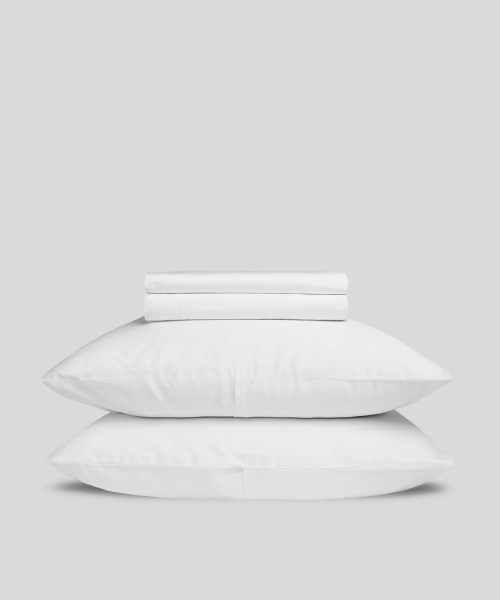
Available at: Parachute Home (parachutehome.com), in Parachute retail stores
Best for: Warm sleepers, those upgrading from standard department store sheets, anyone who wants sheets that genuinely improve with every wash.
Parachute’s percale sheets are the first bedding upgrade I’d recommend to almost anyone. The long-staple cotton in a percale weave — the crisp, breathable, plain one-over-one-under construction — breathes in the specific way that makes warm sleepers more comfortable without making cool sleepers cold.
The improving-with-washing quality is what distinguishes Parachute from adequate alternatives. Most textiles perform at their best when new and degrade with use and washing. Parachute percale starts good and gets genuinely better. The thread structure relaxes and softens with each wash in a way that produces real luxury by wash ten to fifteen that wasn’t present on day one. This trajectory — improving rather than degrading — is the characteristic of quality long-staple cotton that shorter-staple alternatives don’t produce.
After thirty-plus washes: the fitted sheet corners have maintained their elasticity without loosening. The colour (white) has not yellowed. The seams are intact. The fabric is softer and more comfortable than it was when new. This is what quality cotton does.
The temperature management is real for warm sleepers. The open percale weave allows genuine air circulation that heavier sateen weaves prevent. Sleeping under Parachute percale produces fewer overheating events through the night than sleeping under heavier alternatives — not because of any special technology, but because the open weave structure allows the heat to escape rather than accumulating.
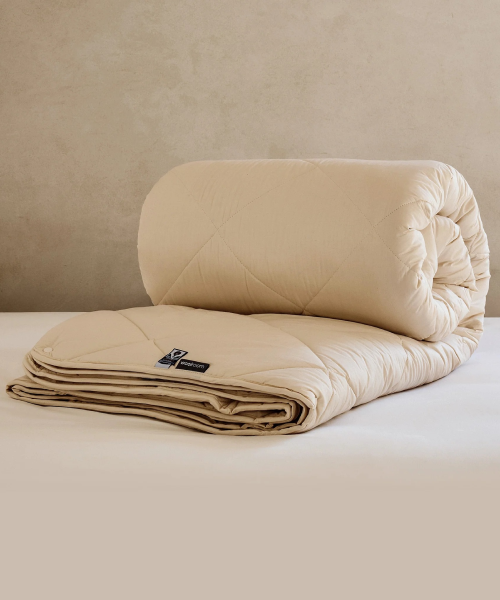
Available at: The Wool Room (thewoolroom.com)
Best for: Warm sleepers, those who experience night sweats, anyone who has found synthetic duvets unsatisfying for overnight temperature regulation.
The Wool Room produces natural wool bedding using British wool, and the wool duvet is the product that produced the most significant change in my sleep quality of anything in the bedding category. The temperature regulation difference is not subtle — it’s immediately apparent from the first night.
Wool as a duvet fill is genuinely different from synthetic alternatives in two specific ways. First, wool fibres regulate temperature actively rather than passively — the fibre structure absorbs and releases moisture as body temperature changes, responding to the sleeper rather than maintaining a fixed warmth level regardless of what the sleeper’s body is doing. A wool duvet doesn’t trap heat in the way synthetic fill does because it’s actively processing the moisture that heat generates.
Second, wool manages moisture at a scale that synthetic fill cannot match. Wool absorbs up to 30% of its weight in moisture before feeling damp. Synthetic fill becomes clammy at a fraction of that absorption. For warm sleepers who experience the specific clammy warmth that synthetic duvets develop when body temperature rises through the night, the wool duvet removes this experience entirely.
Available in 4.5 tog (summer), 9 tog (transitional), and 13.5 tog (winter). The all-seasons combination — 4.5 tog and 9 tog used separately in summer and winter, together in autumn and spring — is the most practical option for most households. The Wool Room uses British wool meeting Woolmark quality standards with a cotton percale cover that adds to the natural material quality throughout.
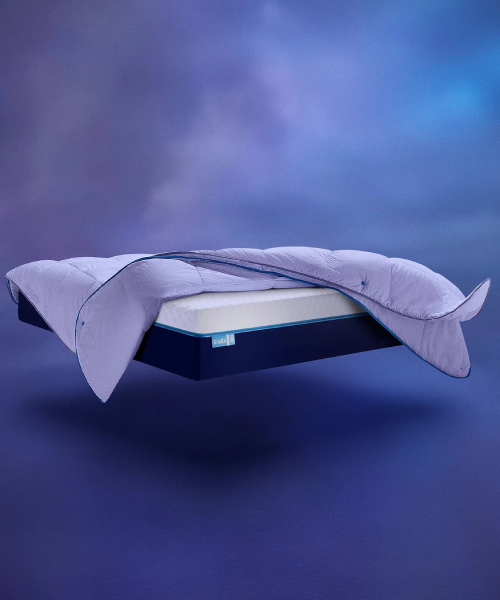
Available at: Simba Sleep (simbasleep.com)
Best for: Couples with different temperature preferences, those who want technology-based temperature management alongside natural materials.
Simba’s Hybrid Duvet applies the same technology-meets-comfort thinking that their mattresses demonstrate to bedding. The duvet combines their Stratos phase-change material — a polymer that absorbs heat when body temperature rises and releases it when body temperature drops — with natural fill for comfort and breathability.
The Stratos technology actively manages temperature rather than passively insulating, which makes the Simba Hybrid a specific recommendation for couples with different temperature preferences. A duvet that responds to each person’s temperature rather than maintaining a uniform warmth across the bed is the solution to the specific bedding negotiation that couples with different sleep temperatures navigate every night.
The fill weight options and the overall construction quality are above what the price would suggest from a brand primarily known for mattresses.
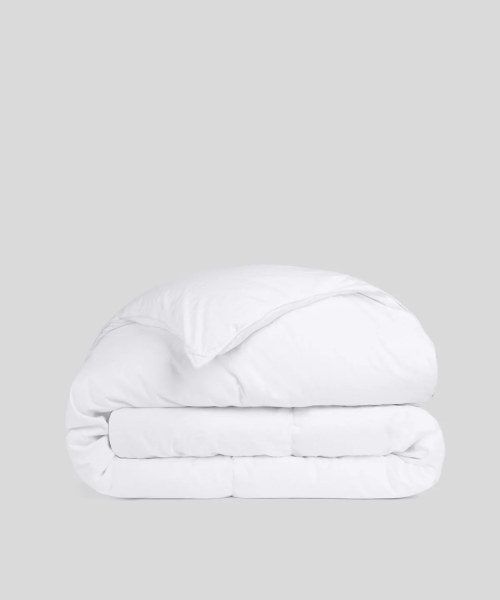
Available at: Parachute Home (parachutehome.com)
Best for: Allergy sufferers who want down-like comfort, those who want easy home washing.
For those who want the down-like weight and loft of a traditional duvet without allergen concerns, Parachute’s Down Alternative Comforter is the most consistent recommendation. The hypoallergenic polyester fill is tested specifically for allergen absence, the box-stitch construction distributes fill evenly without clustering at the edges, and the cotton shell breathes adequately for most sleepers.
The warmth weight options — lightweight, all-season, and extra warm — allow genuine matching to sleeping temperature preferences. The machine washability is also a practical advantage over natural down that requires professional cleaning: a duvet you can wash at home is one you’ll actually wash, which matters for hygiene over years of nightly use.
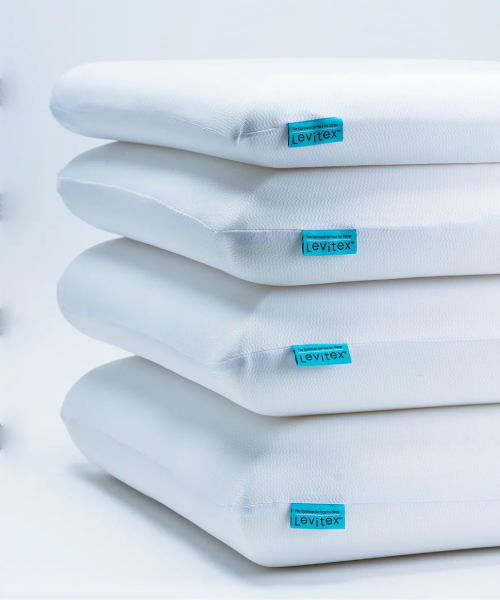
Available at: Levitex (levitex.co.uk)
Best for: Those who wake with neck ache, those who’ve never found a pillow that prevents morning discomfort regardless of sleep position.
The Levitex pillow deserves separate mention because the design approach is categorically different from other pillows. Founded by a rehabilitation specialist, Levitex designed the pillow with spinal alignment as the primary engineering criterion — a specific decision to prioritise what the pillow does for the spine rather than how it feels against the cheek.
The Levitex maintains the head at the correct angle for spinal alignment regardless of sleep position, using a graduated support structure that provides more support at the neck than at the head. The pillow doesn’t feel distinctive on first use. The difference is experienced upon waking: the neck ache I’d attributed to sleeping position for years significantly reduced after two weeks of sleeping on this pillow.
This is the correct direction for a pillow that’s actually doing its job — the improvement happens during sleep and is experienced in the morning, not at the moment of falling asleep.
Wool duvets do not need frequent washing — the natural lanolin in wool provides antimicrobial properties that reduce the bacterial accumulation that necessitates regular washing of synthetic alternatives. Airing the duvet outdoors in fresh air every few months is the primary maintenance requirement, supplemented by washing every one to two years following the manufacturer’s specific instructions.
Percale sheets wash well on cold or warm (not hot) cycles. High heat accelerates fibre degradation in cotton — the quality that makes Parachute percale improve with washing is supported by the correct washing temperature. Tumble dry on low or line dry, and remove promptly to prevent the clamped texture that over-dried cotton develops.
Store bedding in breathable cotton or linen storage bags rather than plastic, which traps moisture and can encourage mildew in natural materials.
Bedding that genuinely improves sleep is one of the best investments per daily use available in home furnishings. Parachute percale sheets are the foundation: breathable, improving with every wash, genuinely different from standard cotton alternatives. The Wool Room natural wool duvet is the single change most likely to improve overnight temperature regulation for warm sleepers and night sweat sufferers. Duckworth serves American buyers wanting domestic wool sourcing. Simba’s Hybrid Duvet addresses the couples’ temperature preference problem. Parachute Down Alternative removes the allergy concern without sacrificing comfort. And Levitex addresses the morning neck ache problem that every other pillow has failed to solve. Start with the sheets and the duvet — these two changes produce the most immediate and most sustained improvement to sleep quality, and the difference begins on the first night.