

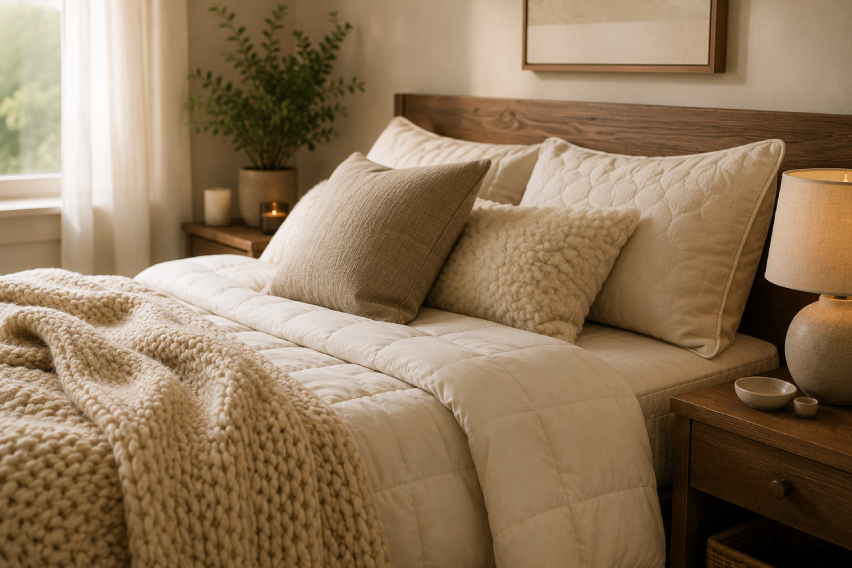
I was a synthetic duvet person for most of my adult life, not because I’d evaluated the alternatives and made a considered decision, but because synthetic duvets were what I’d always bought and I hadn’t had sufficient reason to investigate further. The reason arrived in the form of two consecutive winters of genuinely disrupted sleep — waking in the early hours feeling too warm, then too cold, then unable to return to sleep with the quality that the first few hours of the night had.
When I eventually connected this pattern to the synthetic duvet rather than to external factors I’d been blaming, I replaced it with a wool duvet from The Wool Room. The change was immediate and sustained. Here is what I understand about why.
The temperature regulation story for wool is not marketing language — it’s fibre science that produces a genuinely observable difference in sleep quality.
Wool fibres have a crimped structure that creates millions of tiny air pockets within the duvet fill. These air pockets provide efficient insulation — which is what most duvets do. The additional property of wool that synthetic fill fundamentally lacks is moisture absorption: wool fibres can absorb up to 30% of their weight in moisture before feeling damp, and they release that moisture gradually as conditions change.
The practical consequence for sleep is the elimination of the clammy warmth that develops in synthetic duvets when body temperature rises. Instead of warmth accumulating against the skin until discomfort triggers waking, the wool absorbs the moisture associated with that warmth and regulates the temperature at the sleep surface. The result is more continuous sleep — specifically the early-hours waking pattern that I’d experienced and that disappeared within the first week of the wool duvet.
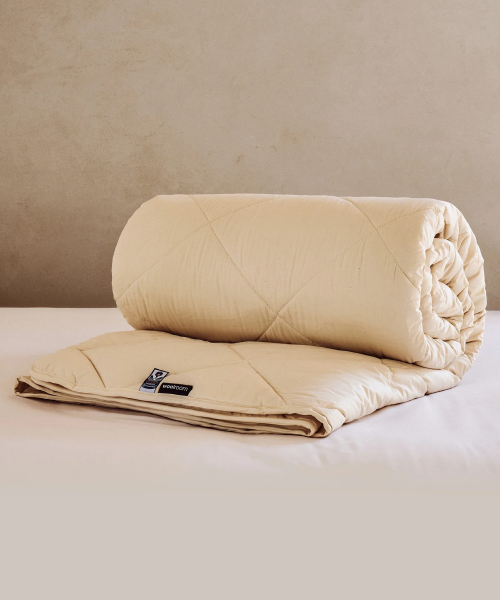
Available at: The Wool Room (thewoolroom.com)
Best for: Warm sleepers, those who experience night sweats, those who have found synthetic duvets unsatisfying for overnight temperature management.
The Wool Room’s Deluxe British Wool Duvet uses British wool meeting the Woolmark quality standard in a construction that produces even fill distribution and appropriate loft for the tog rating. The British wool used is a specific wool type rather than a generic designation — the provenance is documented and the fibre characteristics that produce the temperature regulation benefit are consistent across the product range.
Available in 4.5 tog (summer), 9 tog (transitional), and 13.5 tog (winter). The all-seasons combination — a 4.5 tog and a 9 tog duvet that attach together to form a 13.5 tog winter combination and separate for summer and transitional use — is the most practical option for most households. The initial investment is higher than a single duvet, but the system serves all seasons without storing separate bedding.
The cotton percale cover adds natural material quality throughout and handles machine washing in a way that maintains the fill’s distribution and loft. The cover can be spot-washed regularly and the whole duvet washed every one to two years following The Wool Room’s instructions — less frequent than synthetic alternatives because the lanolin in wool provides antimicrobial properties that reduce the need for regular washing.
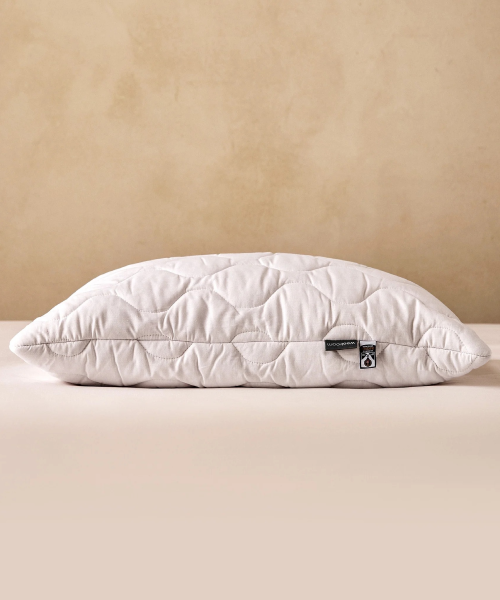
Available at: The Wool Room (thewoolroom.com)
Best for: Those who want the temperature regulation benefit of wool extended to pillow material.
The wool fill pillow applies the same temperature regulation properties in a pillow format, which is relevant because pillow temperature affects the sleep environment around the head and neck — the area most sensitive to temperature disruption during sleep.
The pillow provides medium-firm support that suits back and side sleepers adequately. It doesn’t have the conforming quality of memory foam pillows, which is either an advantage (no heat retention) or a limitation (less pressure relief) depending on the sleeper’s specific needs. For those whose primary sleep disruption is temperature-related, the wool pillow’s non-heat-retaining character is the relevant quality.
The specific improvement in my sleep: the early-hours waking pattern that I’d experienced through two previous winters on synthetic bedding stopped within the first week of switching to the wool duvet. I cannot attribute this change entirely to the duvet with certainty — other factors may have changed at the same time. What I can say is that the change coincided precisely with the bedding change and has not reversed through two subsequent winters of continued wool duvet use.
The wool duvet requires different care than synthetic alternatives but not more care. The antimicrobial property of the lanolin in wool means it doesn’t need washing as frequently. Airing outdoors on dry days every few months is the primary maintenance. Full washing every one to two years following The Wool Room’s specific instructions maintains quality without the quarterly or more frequent washing that some synthetic duvets require.
The Wool Room produces natural wool bedding with genuine material quality and the temperature regulation properties that wool provides are real and immediately observable rather than gradually developing. For warm sleepers, for those who experience night sweats, or for those who’ve found synthetic duvets consistently unsatisfying without being able to identify why, the switch to wool bedding is the specific change most likely to improve overnight sleep quality. The investment is higher than standard synthetic alternatives at the same tog rating, but the durability (wool duvets outlast synthetic fill by years) and the sleep quality benefit make the price difference a genuine investment rather than a premium for premium’s sake.