

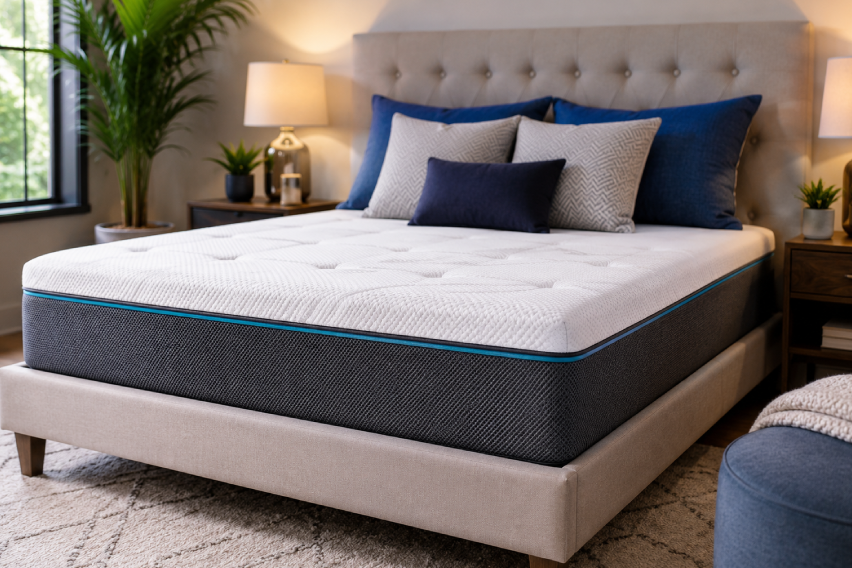
Simba was the mattress that appeared in every piece of sleep content for three consecutive years before I bought one. I approached the purchase with appropriate skepticism about a brand that had been successful at marketing and wanted to confirm whether the product was equally successful at being a mattress.
The 200-night trial removed most of the financial risk from the experiment. The experiment produced conclusions I can share honestly. I did not return the mattress.
The Hybrid Pro is Simba’s premium mattress, above the standard Hybrid in the stack. The construction layers from top to bottom: a tufted cover, a Simbatex foam comfort layer, a memory foam transitional layer, a micro-spring (Aerocoil) layer with 2,500 springs in a double size, and a support foam base.
The Simbatex foam is the branded material that Simba uses to differentiate from competitors who use standard memory foam. The open-cell structure provides more air circulation than dense memory foam and the material responds to temperature rather than maintaining the uniform warmth that warm sleepers find uncomfortable in standard memory foam mattresses.
The Aerocoil micro-springs provide the pocket spring benefit — individual point support that responds to body weight distribution — at a smaller scale than traditional pocket springs. The higher spring count compared to traditional pocket spring designs provides finer granularity of support.
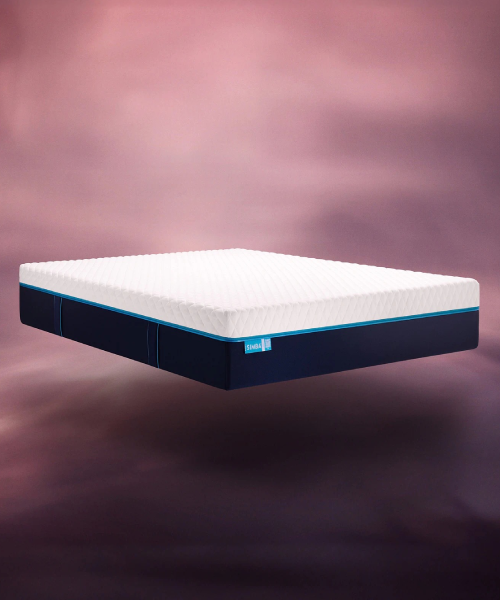
Available at: Simba Sleep (simbasleep.com)
Best for: Those who sleep warm, have mild to moderate back concerns, want the longest trial period available, and value a technology-forward approach.
The first two weeks of the Simba Hybrid Pro felt different from my previous mattress in a way I couldn’t immediately characterise as better — just different. The support was more noticeable, in the sense of being something I was aware of rather than simply resting on. By week three, this awareness had resolved into genuine comfort.
This adaptation period is expected and worth acknowledging honestly for anyone in the first weeks of a new mattress who is uncertain whether the adjustment reflects the mattress or their own adaptation. The two to three week adjustment period is real, and the assessment should be made after it rather than during it.
After a full year: I wake with less of the lower back stiffness that characterised mornings on the previous mattress. Whether this is the Simbatex pressure relief, the Aerocoil support, or something else is not separable in experience. The practical outcome is positive and consistent.
The temperature management is the other quality worth noting. I’m a warm sleeper. The Simbatex foam layer manages temperature more effectively than the memory foam mattress it replaced — the waking-from-overheating events that occurred regularly on the memory foam are less frequent on the Simba. Not entirely absent — the system isn’t perfect for all sleepers — but significantly reduced.
Edge support is below average for a foam-dominant mattress, which matters for those who sit on the edge of the bed or want the full width usable for sleeping.
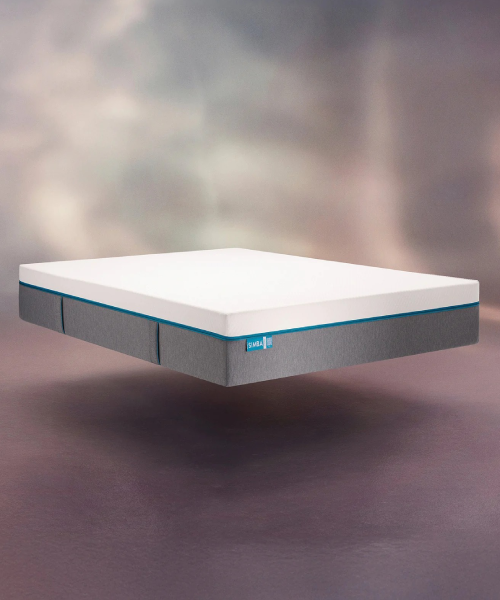
Available at: Simba Sleep (simbasleep.com)
Best for: Those who want the Simba approach at a lower price point.
The standard Simba Hybrid is below the Pro in the range and uses fewer Aerocoil springs and a simpler comfort layer construction. The performance is above budget mattresses and below the Hybrid Pro — appropriate for the mid-range positioning.
For those whose budget doesn’t extend to the Hybrid Pro, the Hybrid provides the Simba approach to hybrid construction at a more accessible price. The 200-night trial applies to both, making the comparison testable rather than theoretical.
The 200-night trial is the feature that most clearly removes the risk from the Simba purchase, and it should be used as intended rather than treated as a theoretical backstop.
If the mattress isn’t producing better mornings by week eight to ten, the trial should be initiated. Simba’s collection process is straightforward — the mattress is collected from home and donated to charity rather than returned to a warehouse. The process that’s described on their website matches what customers report in reviews.
Make notes on specific days. Day one feels like a new mattress. Day seven feels like adjustment. Day thirty reveals the first consistent pattern. Day sixty reveals whether the pattern is improvement, stability, or stagnation. The notes make the decision clearer than memory alone.
The Simba Hybrid Pro is worth buying for those whose sleep concerns align with what the mattress addresses: temperature management for warm sleepers, pressure relief for those with mild back concerns, and the confidence that comes with the most generous trial period in the mainstream mattress market. For those who prefer the feel of traditional pocket spring with natural comfort layers, or who need maximum edge support, alternatives serve better. But for the profile of sleeper the Simba is designed for, the year of use has validated the purchase.