

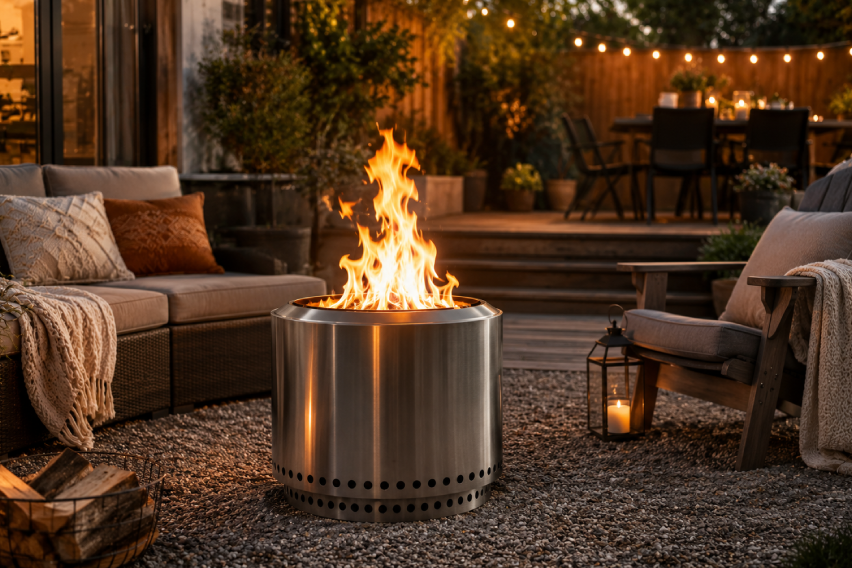
The Solo Stove Bonfire has been on my radar since the brand went viral approximately four years ago. I spent two of those years deciding whether the smokeless claim was genuine physics or aspirational marketing. One more year reading reviews from people who’d owned one long enough to have a real opinion. Then I bought one.
Two years of backyard use later, here is the honest review — including the answer to the smokeless question.
The secondary combustion technology is genuine physics rather than marketing language. The Bonfire’s design creates a specific airflow pattern: air enters from holes at the base, feeds the primary combustion in the main chamber, and the hot air rising through the gap between the inner and outer walls creates a secondary combustion zone at the top rim that burns the smoke particles before they escape the fire.
The result: significantly less smoke than a conventional fire pit at the same fuel size. Not zero smoke — the honest answer is that nothing burning wood produces zero smoke — but dramatically less, particularly when the fire is established and burning at temperature. The smoke occurs primarily during the lighting phase, when the fire is building to the temperature at which secondary combustion activates, and when conditions work against the mechanism: damp wood, strong crosswind, fuel that produces more smoke than dry hardwood.
The specific experience: I have sat beside the Solo Stove Bonfire for two hours without any smoke reaching my face. I have also sat beside it on a windy evening and found the secondary combustion less effective than usual. The mechanism is genuine and weather-dependent, which is an honest description of outdoor fire equipment.
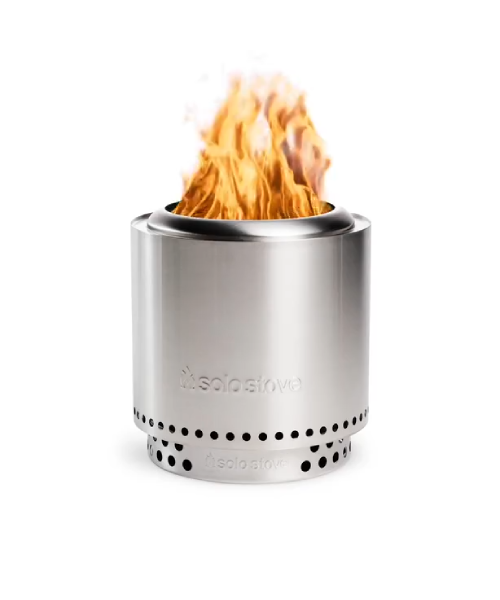
Available at: Solo Stove (solostove.com)
Best for: Smaller patios, balconies, or those who want a more portable option.
The Ranger is the smaller version of the Bonfire — the same secondary combustion design at a scale appropriate for smaller outdoor spaces or for portability to campsites and outdoor events. The fuel capacity is lower, which means more frequent fuelling to maintain a fire of the same duration, but the product otherwise delivers the same smokeless fire experience in a more compact and portable format.
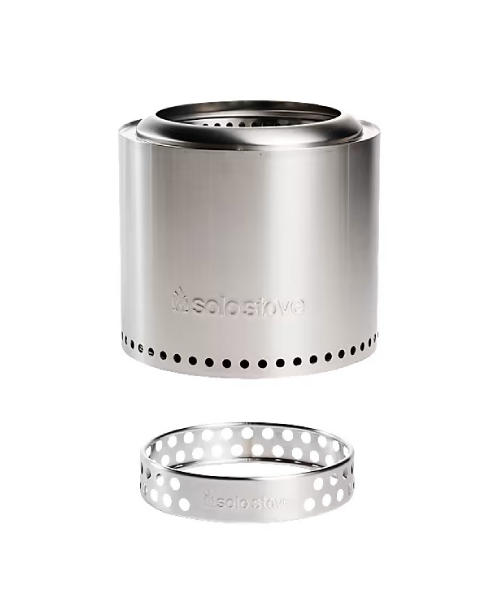
Available at: Solo Stove (solostove.com)
Best for: Anyone placing the Bonfire on a wood deck, grass, or any surface that heat could damage.
The stand raises the Bonfire approximately seven inches from the ground surface, which is sufficient to prevent heat damage to wood decking and grass in normal use. The removable design allows storage when the stand isn’t needed — for example, on stone or concrete surfaces that don’t require the protection.
Buy the stand at the same time as the Bonfire rather than discovering you need it after the first use.
Use dry hardwood. The secondary combustion mechanism works best with fuel that burns hot and clean — seasoned hardwood (oak, hickory, ash) produces the cleanest secondary combustion and the lowest smoke output. Green wood, wet wood, and softwood all produce more smoke than the mechanism can fully address.
Start with a proper fire-starting method. Kindling and fire starters beneath the initial fuel, rather than large wood added to an uncertain flame, allows the fire to reach temperature more quickly — which activates secondary combustion sooner. The lighter cube and small kindling approach works better than newspaper and larger logs from the start.
Let the fire build before adding large logs. The secondary combustion temperature activates around 300°C internal temperature — a fire that’s been burning for fifteen to twenty minutes with appropriate fuelling reaches this before you add the larger logs that produce the sustained heat output.
Don’t use in wet or very windy conditions. The secondary combustion is most effective in still air and at temperature. Heavy rain quenches the fire before it reaches operating temperature. High crosswinds disrupt the airflow pattern that the design requires.
The Solo Stove Bonfire earns its price for anyone who wants a backyard fire pit that performs significantly better than conventional alternatives on the smoke question and that requires minimal maintenance. The smokeless claim is genuine with appropriate caveats about conditions and fuel. The heat output is better than expected. The durability after two seasons is as good as the steel construction suggests it should be. Buy the stand alongside the Bonfire. Use dry hardwood. Let the fire build before adding large logs. And the specific outdoor evening experience the Bonfire creates — the clear, bright, genuinely warm fire that you can sit beside without being smoked out — is worth the investment.