

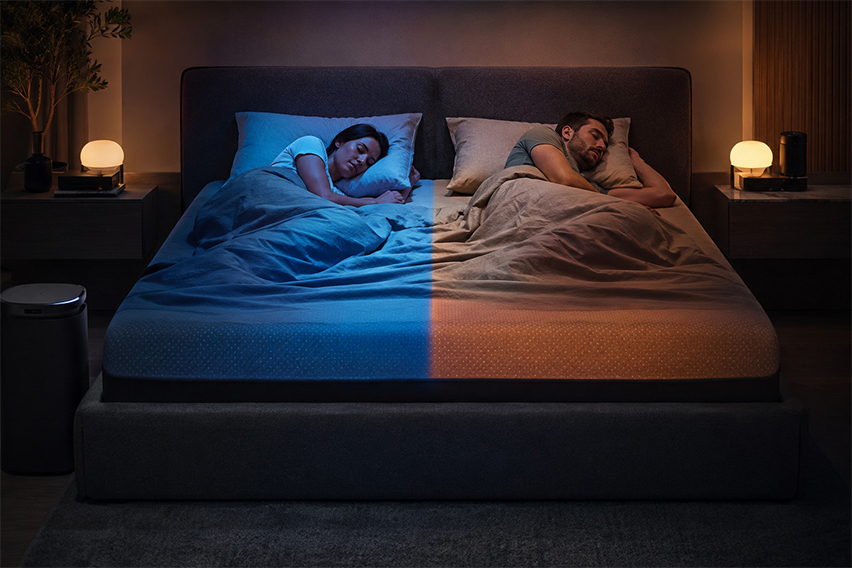
Most couples have had some version of the same argument. One person is too hot. The other is too cold. The thermostat gets adjusted, someone kicks off the covers, someone pulls them back, and at least one person ends up sleeping worse than they would have alone.
This is not a compatibility problem. It's a physics problem. Two people generating different amounts of body heat sharing the same sleeping environment with the same temperature have no good solution with conventional bedding or a conventional thermostat. The Eight Sleep Pod 5 dual-zone system is the first thing that actually fixes it.
Body temperature during sleep is highly individual — influenced by metabolism, hormones, fitness level, and age. If one person's optimal sleeping temperature is 63°F and the other's is 74°F, there is no room temperature that serves both of them. 68°F makes the hot sleeper too warm and the cold sleeper too cold. You're optimizing for neither.
Separate blankets help with the perception of warmth but don't address the underlying issue — both people are still in the same thermal environment, sharing the same mattress that absorbs and redistributes heat from both of them. A hot sleeper generates heat that radiates across the mattress and warms their partner's side. The mattress is a thermal conductor connecting two people who want different things. The only real solution is independent temperature control at the sleeping surface level.
The Pod 5 cover has two completely independent water circuits — one for each side of the bed. Each circuit connects to the same hub but runs separately. The temperature you set on your side has no effect on your partner's side. The water doesn't mix, the thermal effect doesn't cross the center line, and both Autopilot profiles run independently.
In practice this means one person can be running at 62°F while the other is at 76°F simultaneously. The center line between the two zones is clean — there's no meaningful temperature bleed from one side to the other. Both sides also get independent Autopilot. Your profile learns your sleep patterns. Your partner's profile learns theirs. The two don't influence each other.
Both people get independent sleep tracking from the same cover. Heart rate, breathing rate, movement, and sleep stages are tracked separately for each side. Each person gets their own sleep report in the app — your morning sleep score reflects your sleep, not an average of both of you. Your partner sees their own data. This matters practically because the most useful thing about Eight Sleep's tracking is identifying individual patterns — these patterns are individual and mixing them with your partner's data would make them harder to identify.
The Pod 5 includes a vibration alarm that wakes you by vibrating your side of the mattress cover — your partner doesn't feel it at all. If one person needs to be up at 6am and the other at 8am, the 6am alarm wakes the first person without disturbing the second. No buzzing phone next to both of you. No sound alarm that pulls both people out of sleep. For couples with different wake times — which is most couples — this removes one of the most common sources of morning sleep disruption.
Setup is the same as the single-zone Pod 5. The dual-zone configuration is handled entirely in the app — you assign sides, each person downloads the Eight Sleep app and connects their profile to their side. Each person goes through their own initial temperature calibration separately. The first two weeks apply to both people independently — both Autopilot profiles need data to start making confident adjustments.
A practical tip: the hot sleeper should start lower than feels comfortable and adjust up. The cold sleeper should start at whatever feels right. The most common setup mistake for couples is both people setting their initial temperatures too similar because the presence of the other person creates a false sense of what each side needs independently.
Couples where temperature is a genuine source of sleep disruption for at least one person — this is the clearest use case. If one person is consistently too hot and the other is fine or cold, the dual zone solves that completely. If both people sleep hot, the Pod 5 improves both of their sleep simultaneously without any trade-off. Couples with different schedules benefit from the vibration alarm and independent Autopilot scheduling. Couples who have already tried everything else — the thermostat argument, separate blankets, fans — get an actual solution rather than another compromise.
The Pod 5 Cover starts around $2,195 for a Full and goes up to $2,695 for a King. For a couple sharing one system, that cost is effectively split between two people — $1,100 to $1,350 per person for a King. Framed that way, it's a more reasonable number than it looks at full price. The membership runs $17 to $25 per month and covers both sides — you don't pay per person. The 30-night trial covers the whole system regardless of how many people are using it.
Yes. The independent water circuits, the independent Autopilot profiles, and the clean thermal separation between zones all deliver what they promise. The couple temperature problem — the one with no good thermostat solution — is genuinely solved by the Pod 5 dual-zone system. Two people in the same bed at genuinely different temperatures, with independent sleep tracking, independent alarms, and independent Autopilot. This is what the Pod 5 delivers for couples and it works as advertised.
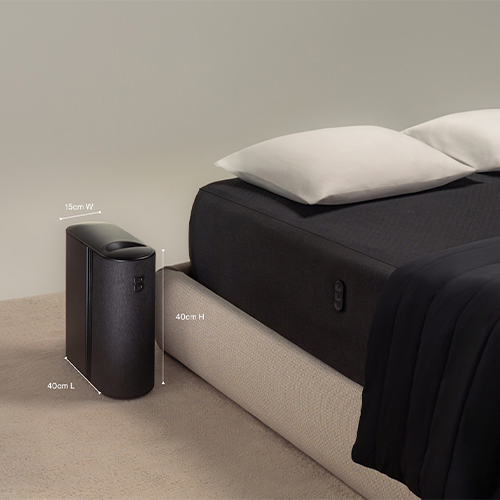
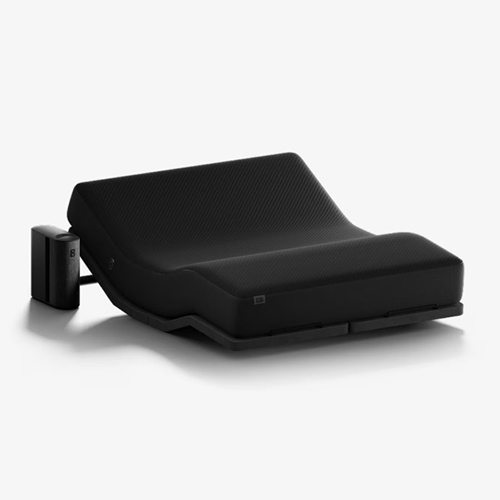
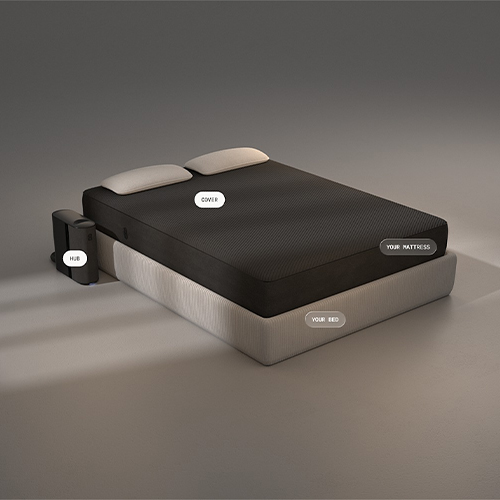
The thermostat argument ends here. Eight Sleep Pod 5 gives both people the temperature they actually need — same bed, different zones, no compromise.
Shop Eight Sleep Pod 5 — Official Site