

Sleep is the one recovery tool that every serious athlete agrees on and almost nobody does well. Nutrition gets optimized. Training programs get periodized. Recovery modalities — ice baths, compression, massage — get scheduled. And then people sleep on whatever mattress they bought five years ago in a room that’s too warm because they didn’t want to run up the electricity bill.
The performance crowd has been using Eight Sleep for a few years now. You see it in training documentaries, in athlete podcasts, in the social media of people who track every biometric they can find. The claim is that it meaningfully improves sleep quality and therefore recovery. The honest question is whether that claim holds up outside of the marketing context.
Before getting into what Eight Sleep does or doesn’t do for athletes, understanding what the body is actually doing during recovery sleep matters. It’s not just rest. Sleep is when most of the physiological work of recovery happens.
Human growth hormone — the primary hormonal driver of tissue repair and muscle protein synthesis — is released in pulses during deep sleep, primarily in the first half of the night. The magnitude of those pulses correlates with the depth and quality of slow-wave sleep. Poor deep sleep means reduced growth hormone release. Reduced growth hormone means slower tissue repair.
Glycogen resynthesis — restoring the fuel your muscles depleted during training — happens continuously during recovery but is enhanced during sleep. Athletes who sleep poorly between training sessions are starting the next session with depleted glycogen stores relative to what they’d have with quality sleep, which affects both performance and the ability to train hard.
The immune system does a significant portion of its repair work during sleep. Inflammation from training — the micro-damage that stimulates adaptation — is processed and cleared during sleep. Inadequate sleep means that inflammatory process runs longer, which is one of the reasons sleep-deprived athletes often feel perpetually beat up rather than recovering between sessions.
HRV, which the Eight Sleep Pod 5 tracks, is the clearest readout of recovery status that’s accessible without clinical equipment. A high overnight HRV generally means the autonomic nervous system is in a parasympathetic, recovered state — the body is handling the training load well. A low HRV night or a declining HRV trend indicates the system is under stress, whether from training load, poor sleep, illness, or other stressors. Eight Sleep surfaces this every morning without requiring an athlete to wear anything to bed.
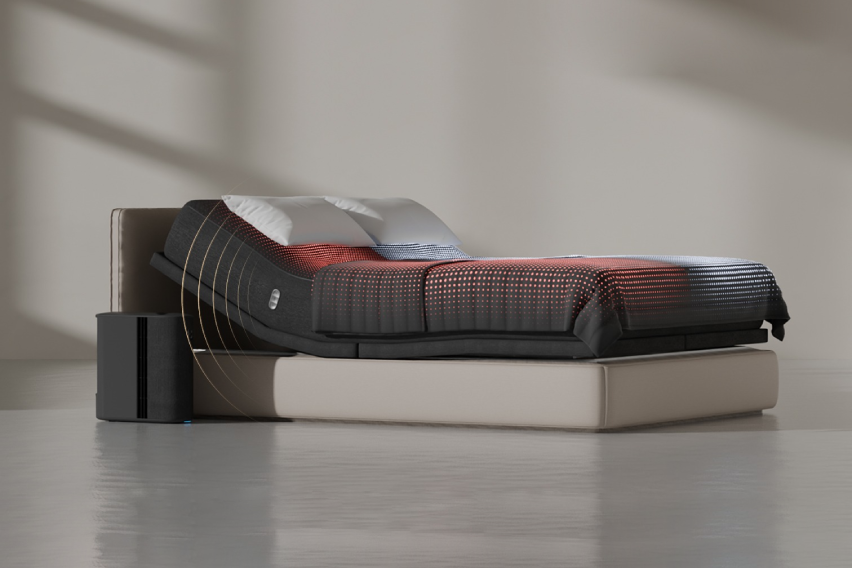
The Pod 5 addresses the temperature side of sleep quality, which matters more for athletes than most people realize.
Athletes generate more body heat at rest than sedentary people — higher metabolic rate, more muscle mass, higher baseline body temperature. This means the thermal environment that disrupts a non-athlete’s sleep disrupts an athlete’s sleep even more severely. A room that’s borderline too warm for someone who sat at a desk all day is definitively too warm for someone who trained hard that afternoon.
The active cooling addresses this directly. An athlete sleeping on a Pod 5 with their side set to 62°F to 65°F is getting their sleeping surface actively cooled throughout the night, which supports the core temperature drop that deep sleep requires. For athletes who train in the evening and go to bed with an elevated core temperature, the Pod 5’s pre-cooling feature — which starts cooling the bed before you get in — accelerates the cool-down process that the body needs to initiate sleep.
The Autopilot temperature management across the night matters for athletes specifically because the first half of the night is when deep sleep is most concentrated and when growth hormone release peaks. If the sleeping environment is too warm during that window — even by a few degrees — deep sleep quality suffers and the recovery hormonal response is blunted. Autopilot, once it’s learned an athlete’s sleep pattern, maintains the cooler temperature during the deep sleep window and adjusts as the night progresses toward lighter sleep and REM.
The HRV tracking gives athletes a daily readout of recovery status that they can use to adjust training load. Seeing a declining HRV trend over several days — which often precedes overtraining symptoms by several days — allows a coach or athlete to back off load before the body forces the issue. This is the kind of information that used to require a dedicated heart rate strap and a morning measurement protocol. The Pod 5 collects it passively.
The Pod 5 is not a recovery modality the way an ice bath or compression garment is. It doesn’t accelerate recovery — it removes barriers to recovery. The difference matters.
If an athlete is sleeping seven hours at an appropriate temperature with good sleep hygiene, the Pod 5 might improve their sleep quality marginally. The gains at the margin are real but not transformative.
The transformation happens when an athlete is sleeping poorly because of temperature and the Pod 5 fixes that. Going from disrupted, too-warm sleep to cool, uninterrupted sleep is not a marginal improvement — it’s a fundamental change in sleep quality that has downstream effects on every recovery metric. For the athlete whose sleep is temperature-limited, the Pod 5 is the upgrade that actually matters.
The HRV tracking accuracy for athletes is generally good but worth calibrating against a dedicated device in the first few weeks. Some athletes find the Pod 5 HRV numbers run consistently higher or lower than their wearable — the relative trends are consistent even when the absolute numbers differ. For training decisions, the trends matter more than the absolute numbers, which means even if the Pod 5 HRV doesn’t match your WHOOP exactly, the pattern of high and low nights is usually consistent and useful.
Athletes who train hard in the evening and struggle to fall asleep or sleep well — elevated body temperature from evening training is a real and underappreciated sleep disruptor. The Pod 5’s pre-cooling and continuous cooling addresses this directly.
Athletes who train twice a day or with high weekly volume — sleep quality matters more when recovery time is limited. Getting the most out of the sleep you have is more valuable when there’s less margin.
Athletes who track other health metrics — HRV, resting heart rate, readiness scores — and want sleep data without another wearable. The Pod 5 adds a meaningful data stream without adding to what you’re wearing to bed.
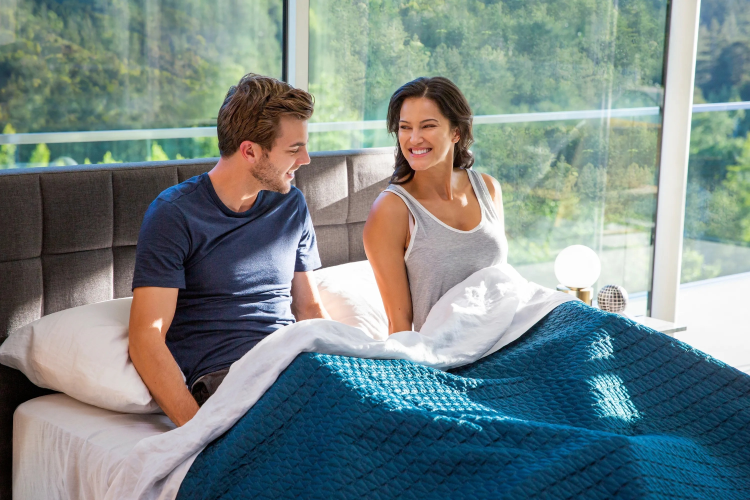
Couples where one athlete and one non-athlete share a bed — the dual-zone system means the athlete can run their side cooler for recovery optimization while their partner maintains a comfortable temperature. This comes up more than people expect.
The Eight Sleep Pod 5 is not a magic recovery tool. It’s a sleep environment optimization system. For athletes whose sleep quality is limited by temperature — which is a larger percentage of athletes than it is of the general population — the improvement in sleep quality has real downstream effects on recovery, performance, and subjective wellbeing.
For athletes already sleeping well at an appropriate temperature, the Pod 5 adds HRV tracking and some marginal temperature optimization. Useful but not transformative.
The 30-night trial period is enough time to see whether the temperature management is making a meaningful difference. An athlete sleeping better and seeing improved HRV trends within two weeks has their answer. An athlete who notices no difference has their answer too.