

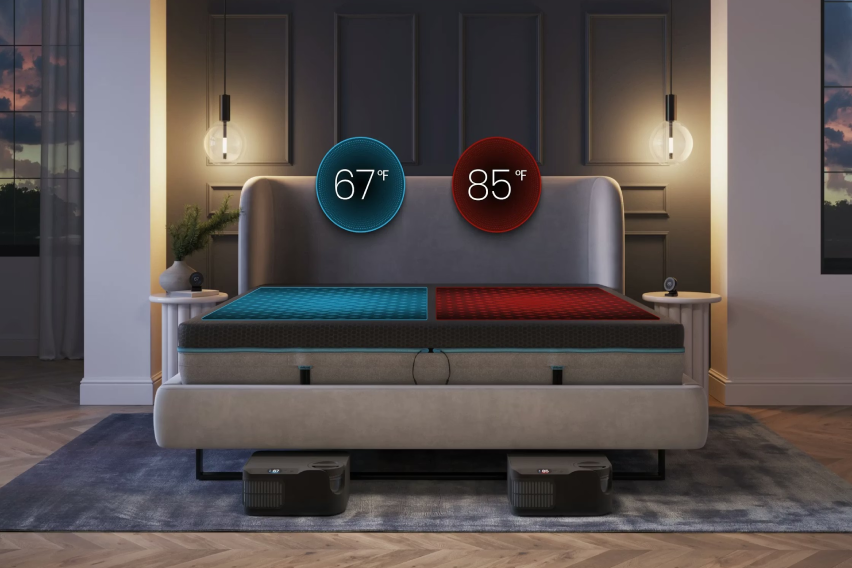
Both systems use the same core technology — water circulating through a mattress pad to control sleeping surface temperature. Both solve the same fundamental problem — a static room temperature and a heat-absorbing mattress aren’t enough for people who sleep hot or couples with different temperature needs. At that level of description, they sound identical.
They’re not identical. The differences between Eight Sleep Pod 5 and Chilipad Cube are meaningful and the right choice between them depends on what you’re actually looking for. Here’s the honest comparison.
Chilipad Cube circulates temperature-controlled water through a pad that sits on top of your mattress. You set a temperature, the system maintains it, and that’s the primary function. It’s a hardware-focused product — good temperature control, reliable operation, minimal software layer.
Eight Sleep Pod 5 does the same thing mechanically but wraps a significant software layer around the hardware. The sensors in the cover track biometrics — heart rate, HRV, breathing, sleep stages — and feed that data into Autopilot, which adjusts temperature throughout the night based on your sleep patterns rather than maintaining a static setting. The Pod 5 is trying to be a sleep optimization system. Chilipad is trying to be a temperature control system.
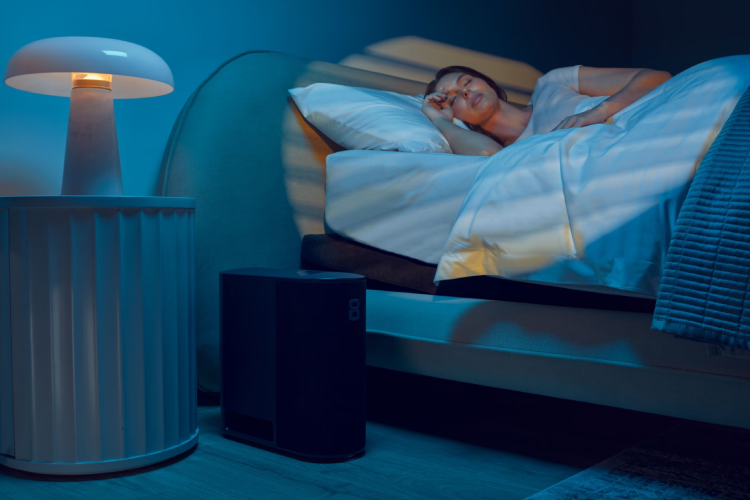
That’s the core distinction. If you want temperature control and not much else, Chilipad is the simpler, cheaper answer. If you want temperature control plus sleep tracking plus smart temperature management that learns your patterns, Eight Sleep is the more complete system.
Both systems cover a wide temperature range. Chilipad Cube runs from approximately 55°F to 115°F. Eight Sleep Pod 5 runs from approximately 55°F to 110°F on the standard version, with an extended cooling range on the Pod 5 that gets colder than earlier Eight Sleep generations.
Both systems deliver on their temperature promises. For hot sleepers who need sustained cooling throughout the night, both products work. The cooling is active and continuous on both — neither system saturates the way a gel topper does.
Where the temperature performance diverges: the Pod 5’s Autopilot means the temperature isn’t static. It shifts across the night based on your sleep stage data. Chilipad holds whatever temperature you set. Whether dynamic temperature adjustment matters to you depends on how you want to use the system.
Both Chilipad and Eight Sleep offer dual-zone options — independent temperature control for each side of the bed. This is the feature that makes either system genuinely useful for couples.
The dual-zone implementation is functionally similar on both products. Each side has an independent water circuit, each side is controlled independently, thermal bleed between zones is minimal on both.
The difference in the dual-zone experience is the software layer. Eight Sleep’s dual zone gives both people independent Autopilot profiles, independent sleep tracking, and independent vibration alarms. Chilipad’s dual zone gives both people independent temperature control — straightforwardly.
Eight Sleep Pod 5 tracks sleep. Chilipad Cube does not.
This is probably the clearest differentiator between the two products. If sleep data — HRV, sleep stages, morning sleep score, health trend tracking — is something you want, Eight Sleep is the product. Chilipad doesn’t offer it.
If sleep tracking isn’t something you’re interested in and you just want your bed at the right temperature, this differentiator doesn’t matter.
Chilipad Cube is meaningfully less expensive than Eight Sleep Pod 5 at similar sizes. A Queen Chilipad Cube dual-zone system runs approximately $700 to $900. A Queen Eight Sleep Pod 5 Cover runs approximately $2,395.
The Eight Sleep membership adds $17 to $25 per month. Chilipad has no subscription requirement.
Over five years, the total cost difference between a Queen dual-zone Chilipad and a Queen Eight Sleep Pod 5 with the standard membership runs roughly $1,500 to $2,000 in Eight Sleep’s favor (meaning Eight Sleep costs that much more).
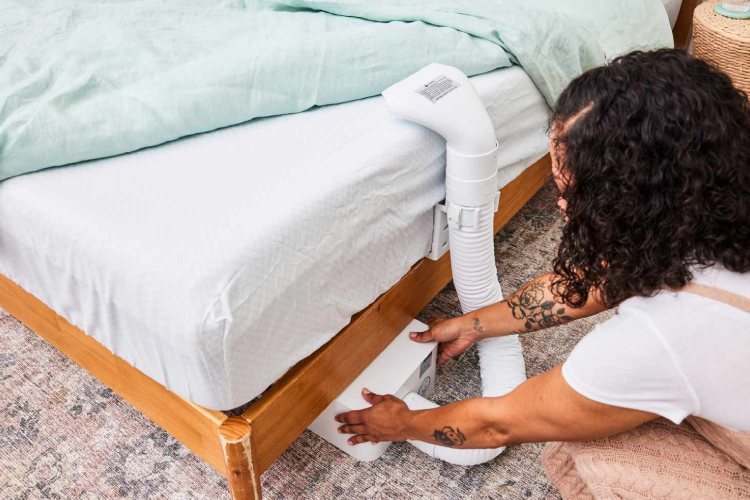
Whether that premium is justified comes back to the software layer. If you’re paying for Autopilot and sleep tracking and using both consistently, the premium has a value case. If you’re paying for a water-cooled mattress pad and you’d be just as happy with manual temperature control and no tracking, Chilipad gets you most of the hardware benefit at a fraction of the price.
Both systems run a hub that circulates water and both hubs make some noise. Eight Sleep Pod 5’s hub runs quieter than earlier Eight Sleep generations and quieter than Chilipad Cube at similar ages. Neither is silent. Both are at a level most people stop noticing within a week.
Chilipad Cube has had some user feedback about noise increasing with age as the pump works harder over time. Eight Sleep’s hub noise is generally consistent across the product’s life.
Buy Eight Sleep Pod 5 if: sleep tracking matters to you, you want smart temperature adjustment rather than manual temperature control, you’re buying into the full system including HRV trending and morning sleep scores, and the price difference is justifiable given what you’re getting.
Buy Chilipad Cube if: you want temperature control and nothing else, you’re not interested in sleep tracking, the Eight Sleep price is genuinely prohibitive, or you want a system you can use without a subscription.
There’s no wrong answer. They’re different products that happen to use the same underlying technology. The right one depends entirely on what you’re actually trying to accomplish.