
Sleep tracking has a credibility problem. Most people who've used a fitness tracker to monitor their sleep have had the experience of waking up feeling terrible and seeing a sleep score that says they slept great. The disconnect between what the data says and what the body actually experienced erodes trust fast.
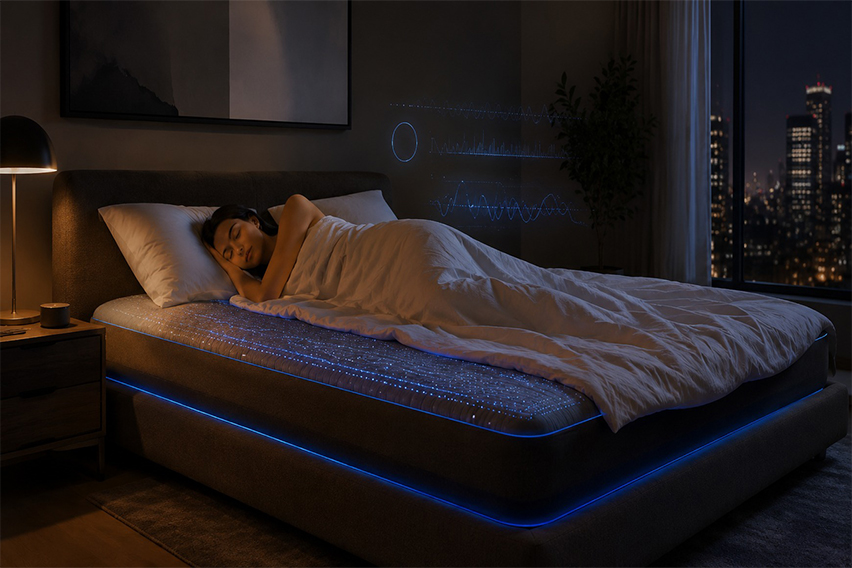
Eight Sleep's approach is different — sensors embedded in the mattress cover pick up biometric signals through the sleeping surface rather than from direct skin contact. The question of whether that produces more or less accurate data than a wearable is worth answering honestly before someone spends $2,000+ partly on the promise of useful sleep data.
The Pod 5 cover contains sensors that detect physical signals transmitted through the mattress surface. Heart rate is measured by detecting the micro-vibrations that your heartbeat creates in the mattress — the mechanical pulse that travels from your cardiovascular system through your body and into the surface you're lying on. Breathing rate is measured similarly — your chest rising and falling creates detectable movement that the sensors identify. HRV is derived from the heart rate measurement, and sleep stages are inferred from the combination of heart rate, HRV, and movement data.
Heart rate measurement from the Pod 5 is accurate to within a few beats per minute for most people in most sleeping positions. During periods of stillness — which is most of the night — the accuracy is comparable to optical heart rate sensors in wrist-based trackers. HRV measurement is where the Pod 5 is most consistently strong for a non-wearable device. Because HRV during sleep is measured during extended periods of relative stillness, the mechanical signal is clean and the derived numbers correlate well with dedicated HRV devices.
Sleep stage classification is where the honest answer requires nuance. The Pod 5's sleep stage data is useful for trend awareness but shouldn't be treated as clinical-grade data. The system reliably distinguishes between wakefulness, light sleep, and consolidated sleep. The distinction between deep sleep and REM is less reliable — without EEG data, the classification involves inference rather than direct measurement. The overall sleep score and trend data over time are meaningful. The specific breakdown of how many minutes you spent in REM on a given night should be treated as an estimate.
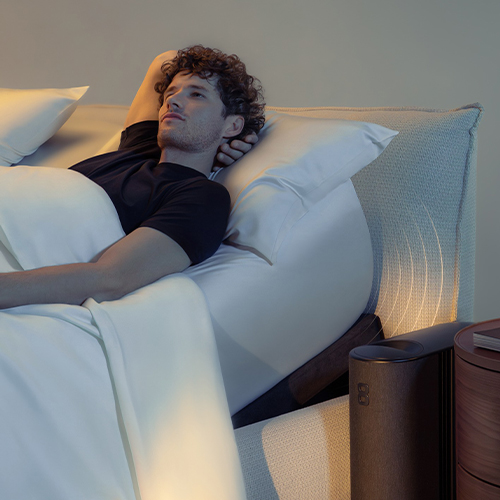
Oura Ring and WHOOP both measure from direct skin contact — optical sensors against the skin provide cleaner heart rate signals in some respects, particularly for detecting subtle HRV patterns. Both also track body temperature, which the Pod 5 does not. The Pod 5's advantage is the absence of the wearable itself. A ring or wristband all night is a sensory input that some people find affects their sleep — particularly light sleepers who notice the device. Sleeping on nothing and getting comparable data is genuinely preferable for that group.
For most people who aren't professional athletes with specific recovery requirements, the Pod 5's tracking is accurate enough to be useful. The question isn't whether it's perfect — no consumer sleep tracker is — but whether it gives you information that's actionable and consistent enough to notice patterns. On both counts, it does.
Every morning the Eight Sleep app gives you a sleep score out of 100. It's a composite of total sleep time, sleep efficiency, sleep stage distribution, HRV relative to your personal baseline, and respiratory quality. It weights these factors against your personal history rather than a population average — your score reflects how last night compared to your typical night. This is the right design philosophy. A score of 75 means something different for someone whose average is 80 versus someone whose average is 70.
HRV during sleep has become one of the most watched metrics in health tracking because it reflects recovery state in a way simple heart rate doesn't. A low HRV night generally indicates physiological stress — illness coming on, poor recovery from exercise, alcohol in the system. A high HRV night indicates the nervous system is in a recovered state. The Pod 5 tracks your overnight HRV and shows it in the context of your personal trend. The relative HRV data — last night compared to your average — is consistent and actionable even if the absolute numbers vary slightly from a chest strap ECG.
For couples using the Pod 5, both people get independent sleep tracking from the same cover. Both people receive independent sleep reports in the morning. The tracking accuracy for couples is slightly lower than for single users because the sensors are managing two signal streams simultaneously — near the center of the bed there can be occasional signal mixing, but for couples sleeping on their own sides this is rare rather than regular.
The Pod 5 tracks biometric signals during sleep. It doesn't tell you why those signals look the way they do. A low HRV night might be stress, illness, alcohol, late eating, or overtraining — the tracking shows you the signal, connecting it to causes requires your own observation. The system also doesn't replace clinical sleep evaluation. If you suspect a sleep disorder, a clinical sleep study is the appropriate tool. The Pod 5 might flag patterns that suggest a disorder but it can't diagnose one.
The Pod 5's sleep tracking is genuinely useful for trend awareness and pattern recognition. Heart rate and HRV data is accurate enough for practical use and consistent enough that trends over time are meaningful. Sleep stage data is best treated as directional rather than precise. The absence of a wearable is a real advantage for people who find trackers disruptive. For someone buying the Pod 5 primarily for temperature control, the tracking is a useful bonus. For someone buying it primarily for sleep tracking, the temperature control is a useful bonus. Either way, the combination in one device is hard to replicate with separate products.
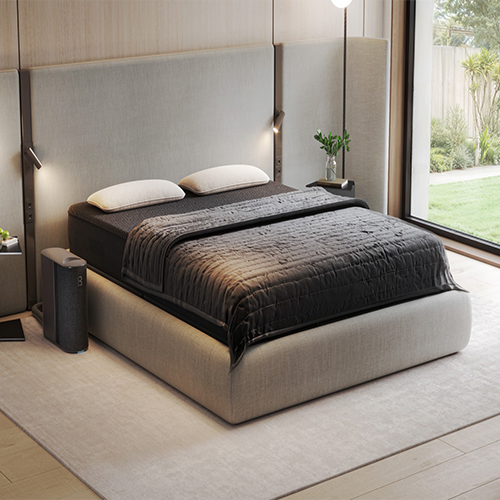
Eight Sleep Pod 5 tracking is accurate enough to be useful and consistent enough to notice patterns. No wearable, no compromise — just data from the surface you sleep on every night.
Shop Eight Sleep Pod 5 — Official Site