

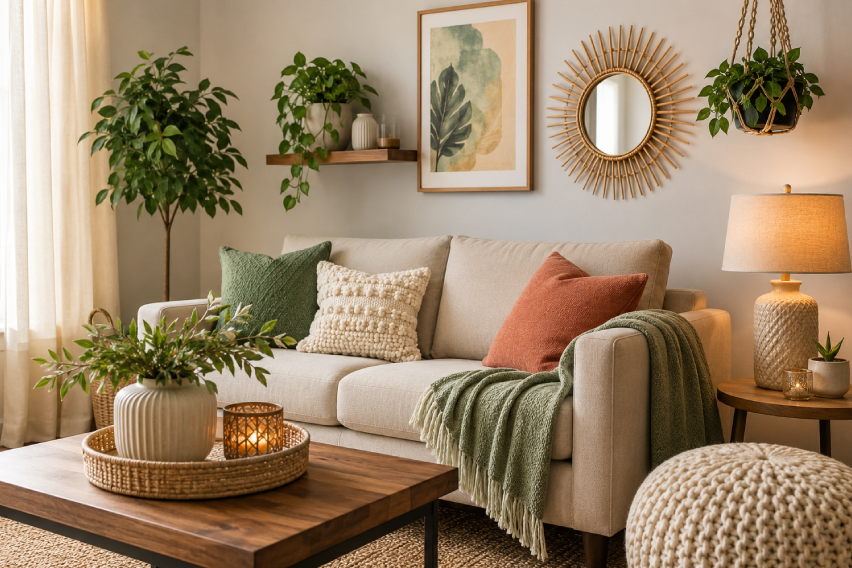
The home improvements that produce the most satisfaction per dollar spent are rarely the large renovation decisions. They’re the small, specific changes to individual friction points or visual weaknesses that produce immediate, observable improvements at manageable cost. I’m a committed believer in identifying the single most visually impactful or daily-life-improving change available and making that change before anything else.
Here are the changes under $100 that produced the most noticeable improvements in our home — and why each one had the effect it did.
Available at: Home Depot, Lowe’s, Amazon, hardware stores
Best for: Anyone whose current door and cabinet hardware is dated, cheap-looking, or inconsistent across the home.
The original hardware in our house was the builder’s standard — the cheapest option installed to satisfy the requirement for doorknobs and cabinet pulls without any consideration for how they’d look or feel over years of use. Brass-coloured plastic that had aged to a dingy gold that suited nothing in the house.
Replacing all of them with brushed nickel hardware cost approximately $60 for the whole house. Doorknobs, cabinet pulls, and drawer handles are all available in coordinating finishes at hardware stores for $3–8 per piece. The change to how the house reads is completely disproportionate to the cost — every door looks slightly more considered, every cabinet looks more intentional, and the rooms they belong to read as more deliberate.
The specific replacement recommendation: satin nickel or matte black, depending on the existing fixtures in the house (taps, light fittings). Choose the finish that coordinates with what already exists rather than introducing a third metal.
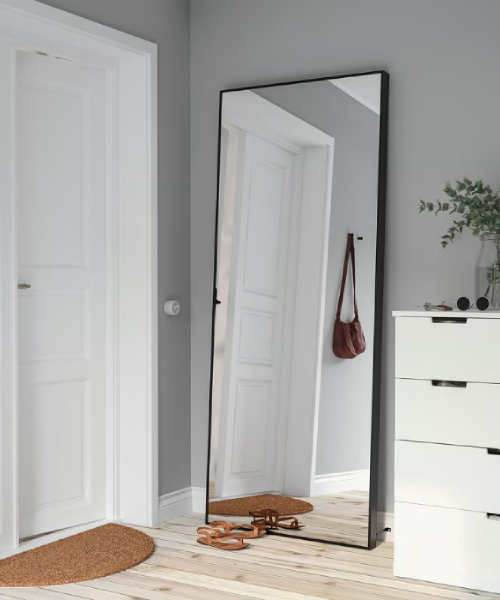
Available at: IKEA (Hovet, slightly over budget but worth it), Facebook Marketplace for framed vintage mirrors, Amazon
Best for: Hallways, small rooms, or any space that feels dark or narrow.
Hallways in most houses are dark and visually narrow. A large mirror on the wall opposite the entrance solves both problems simultaneously: it reflects the available light — amplifying it without adding a light source — and creates the visual impression of significantly more space. The eye perceives the space reflected in the mirror as additional room rather than reflection.
This is a standard interior design technique because it works reliably. The IKEA Hovet mirror at $99 is slightly over the $100 threshold but is the most consistently recommended budget mirror for this application — full-length, clean-framed, and sized to make a genuine difference. Secondhand framed mirrors on Facebook Marketplace typically fall in the $35–65 range and add the character of an older piece alongside the functional benefit.
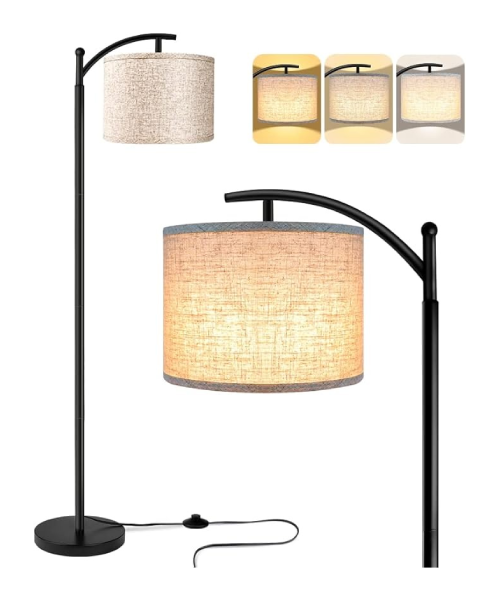
Available at: IKEA, Amazon, Target, HomeGoods
Best for: Any living room or bedroom currently lit only by overhead ceiling light.
Replacing the overhead ceiling light as the primary evening light source with a floor or table lamp using a 2700K warm bulb changes how the room feels in the evening more completely than most furniture changes. The specific warmth of a lower, directional light source versus flat overhead illumination is the difference between a room that feels domestic and one that feels institutional.
The lamp itself doesn’t need to be expensive for this change to produce its effect — a modest lamp base from IKEA in the right scale for the room, with a quality warm-white bulb, produces the atmospheric change that creates the difference. The Pooky lamp mentioned elsewhere on this site is the premium version of this change. A $35 IKEA lamp is the accessible version that produces the same fundamental difference in room atmosphere.
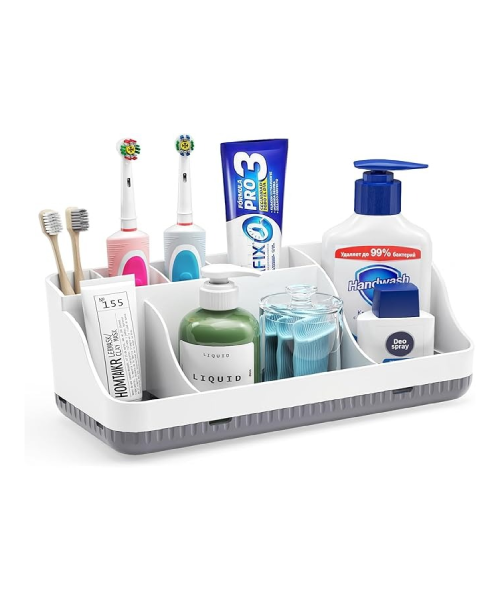
Available at: MUJI, Amazon, Target, HomeGoods
Best for: Any bathroom counter currently covered with mismatched branded plastic dispensers and holders.
Three matching accessories — soap dispenser, toothbrush holder, cotton pad container — in clear acrylic or simple ceramic, replacing the branded plastic originals, is the single change that most immediately makes a bathroom look intentional rather than accumulated.
The effect is disproportionate to the cost because the change involves removing visual noise — the competing colours, logos, and formats of different branded plastic products — and replacing it with a single visual language. The counter goes from looking like a collection of things that arrived separately to looking like a decision that was made.
MUJI’s clear acrylic bathroom accessories are the recommendation: simple, minimal, genuinely well-made for the price, and available in coordinating pieces so the bathroom counter reads as a single considered set.
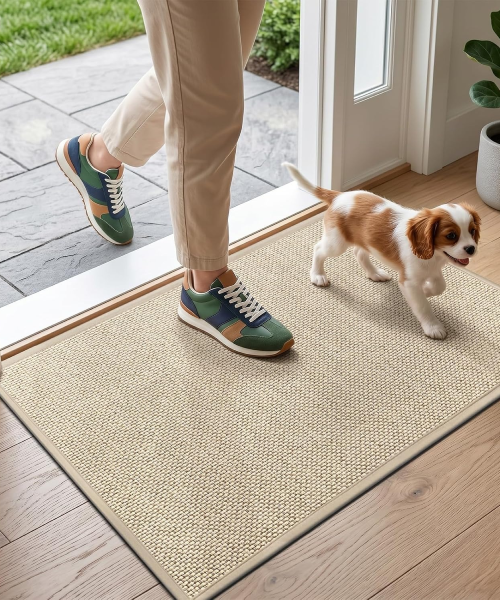
Available at: Amazon, Target, HomeGoods, garden centres
Best for: Any entry whose first impression is a worn or cheap mat.
The doormat is the first thing anyone sees when entering a home and the most frequently replaced inexpensive purchase because cheap mats deteriorate quickly and become an embarrassment before they’re replaced. A quality coir mat with appropriate dimensions — wide enough to comfortably wipe both feet, deep enough to actually clean shoes rather than just touching them — changes the entry impression while performing its practical function better than cheaper alternatives.
The Crate & Barrel natural coir mats at $45–55 are the premium version. The Amazon Basics natural coir mats at $25–35 perform the function adequately. The specific improvement: a doormat that fills the entry space correctly reads as intentional rather than functional, and the entry of a home sets the expectation for everything that follows.
Walk through your home as if you’re a visitor. Look at each room from the doorway before entering. The first thing you notice — positively or negatively — when entering a room as a visitor is usually the thing that would produce the most visual impact if changed.
List the specific small things that produce friction in daily life. The light switch you always reach for in the wrong place. The cabinet that requires fighting to open. The drawer that sticks. These aren’t decorative problems but they’re daily life problems, and fixing them produces the specific satisfaction of a home that works rather than one that simply looks good in photographs.
Buy one thing and notice the effect before buying the next. The satisfaction of a single well-chosen change motivates subsequent changes in a way that buying many things at once and arranging them simultaneously doesn’t.
The home improvements that matter most per dollar spent are almost never the large purchases. They’re the specific, deliberate small changes that address individual visible details or daily friction points: the hardware throughout the house, the mirror in the dark hallway, the lamp in the flatly lit living room, the matching accessories on the bathroom counter, the quality doormat at the entrance. Each of these changes a specific daily interaction with the home rather than improving an abstract quality. The collective effect of five well-chosen $50 purchases is typically more satisfying than a single $250 purchase that was less specifically chosen.