


Financial literacy is the parenting priority that most parents acknowledge as important and few address systematically. The intention to teach children about money, saving, and financial decisions is present in most families. The specific mechanism for implementing this teaching in daily life is usually absent.
Greenlight provided the mechanism in our house, and the changes in how our children think about and discuss money in the year since starting have been more significant than I expected from a prepaid debit card with a monthly subscription.
Greenlight is a children’s prepaid debit card and accompanying app — one parent version and one child version — that allows parents to manage a child’s money digitally while providing the child with real purchasing power: an actual card that works at actual shops.
The parent app provides: chore management with specific payment amounts linked to completion, spending controls by merchant category, real-time notifications of every transaction, savings goal creation with parent-determined interest rates, and a giving allocation for charity. The child app shows the child their balance, spending history, savings progress toward specific goals, and their chore completion record.
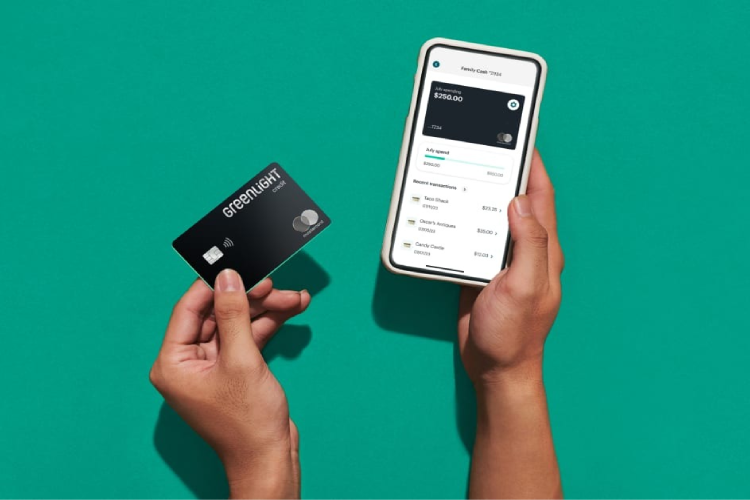
The fundamental concept — money connected to work, controlled spending connected to developing trust, savings goals connected to the child’s actual wants — produces the financial education conversation that doesn’t happen naturally in daily family life.
Available at: Greenlight (greenlight.com)
Best for: Families who want a systematic, engaging approach to teaching children about money through real transactions.
The Greenlight Core Plan is the starting point for most families — the card, the parent controls, the chore system, and the basic savings and giving allocation functions. At $5.99 per month for up to five children, the per-child cost is minimal relative to the educational value produced.
The chore system is the feature that changed daily behaviour most noticeably in our household. Chores linked to specific payment amounts create a direct, visible connection between work and money that weekly pocket money without conditions doesn’t produce. Our eight-year-old completes her chores with significantly less prompting than before Greenlight, because the connection between completion and money appearing in the app is visible and immediate.
The three-pot allocation — Spend, Save, and Give — introduces the allocation concept before any specific spending happens. Each allowance payment divides automatically based on the percentages set in the parent app. The child who understands that some money is for immediate spending, some is building toward something specific, and some is for giving to others has the foundational financial framework that most adults develop late and imperfectly.
The spending controls are the parent-side feature that produces the most useful teaching conversations. We’ve set merchant category approvals for our children at different levels based on their ages and their demonstrated judgment. Each time the card is used — the real-time notification shows amount, merchant, and remaining balance — produces a conversation point rather than simply a transaction.
Available at: Greenlight (greenlight.com)
Best for: Families with older children ready to learn about investing, those who want the additional parental controls and perks.
The Greenlight Max Plan adds the ability for children to invest in fractional shares of stocks with parent approval, providing the introduction to investing that most people didn’t receive until adulthood. For children approaching their teens, the investment feature provides an appropriately supervised introduction to concepts — stocks, market fluctuation, dividend reinvestment — that build financial literacy beyond budgeting and saving.
The parent matching features on Max (1% earned on savings balances and parent-set savings rewards) provide the incentive structure that makes saving genuinely rewarding at the scale of children’s savings amounts.
The most significant change is the most unexpected: the children have started asking questions about money that they never asked before Greenlight. Where money comes from, what things cost in context of their own spending, why savings accumulate differently when added to regularly versus occasionally — these are the financial literacy questions that the abstract discussion about money doesn’t produce but that the concrete experience of a real card and a real balance does.

The chore completion rate has increased significantly, which is either because the system has made the connection between chores and money more visible, or because the Greenlight notification provides immediate feedback that verbal acknowledgment didn’t. Probably both.
The asking-for-things dynamic has changed. Children who have their own money and their own spending decisions make fewer demands for immediate purchases because they understand — through experience — that spending now means less later. This is the financial literacy lesson that no amount of explanation produces as effectively as experiencing it.
Greenlight is worth the $5.99 monthly subscription for families who want a systematic approach to financial education that works through daily experience rather than periodic conversation. The chore-to-payment connection, the three-pot allocation, the real purchasing power, and the parent controls that create the conversations rather than simply restricting spending — these combine into a financial education system that’s more effective than any abstract teaching approach I’ve seen or tried. The investment plan at $9.98 is worth considering as children approach the age where investing concepts make sense. Start with Core and assess whether the additional Max features are worth the upgrade for the specific children involved.