


Most Eight Sleep reviews are written by people who’ve had the product for two weeks. Sometimes three. The review follows a predictable arc — setup experience, first impressions, early Autopilot observations, verdict. These reviews are useful up to a point. They’re not useful for understanding what the product is actually like to live with for six months or a year.
This is the longer-term picture — what changes after the initial period, what stays the same, what nobody writes about because it only becomes apparent after months of use, and whether the product holds up as something you actively use rather than something that fades into the background.
The first month with an Eight Sleep Pod 5 is characterized by active attention. You check the morning sleep report every day. You notice temperature adjustments. You watch your HRV trend building as Autopilot gathers data. There’s a quality of novelty to the interaction — you’re paying attention to your sleep in a way you weren’t before.
By month three, most of that active attention has faded. Not because the product stopped working — because it started working so well that you stopped noticing it. The temperature is right when you get into bed. You sleep through the night. You wake up and the score is good most mornings. You’ve stopped checking the detailed breakdown because you don’t need to — nothing is prompting you to investigate.
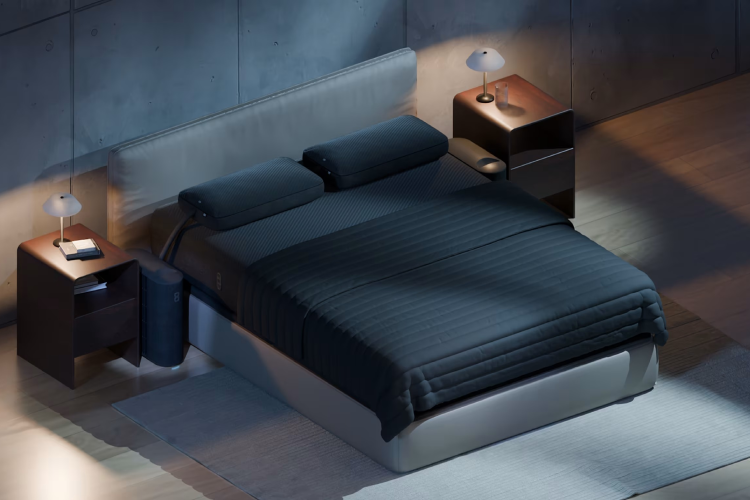
This is the sign of a product doing its job. You notice your mattress when it hurts your back. You notice your HVAC when it breaks. You notice your Eight Sleep when the temperature is wrong, which means you don’t notice it when it’s working. By month six, most consistent users describe the Pod 5 the same way — they don’t think about it until they sleep somewhere without it.
In the first two weeks, Autopilot is making decisions with limited data. By month six, it’s operating on a substantial history. The adjustments become more precise, the pre-cooling timing becomes more accurate, and the temperature curve through the night gets noticeably smoother.
The most commonly reported six-month observation: Autopilot starts nailing the pre-cooling timing. In the first month, the bed is sometimes still warming up when you get in early or already cold when you get in late. By month six, for people with moderately consistent sleep schedules, the pre-cooling hits reliably. You get into bed and it’s already at the right temperature. This sounds like a small thing. It’s not — it’s the difference between getting into a bed that’s actively inviting sleep and getting into a bed that’s still catching up.
The other longer-term Autopilot observation: it gets better at flagging anomalies. An unusual night — higher resting heart rate, disrupted breathing, elevated HRV baseline — shows up more clearly as an anomaly against a longer trend than it did in the first weeks when the trend wasn’t established. By month six, you can see a rough night against context rather than in isolation.
HRV data is almost useless in isolation. A single HRV reading tells you almost nothing without knowing what your personal baseline is, what your range is, and what factors reliably move it up or down.
After six months of Eight Sleep tracking, the data starts talking. You know what your baseline is. You know what a genuinely good recovery night looks like for you specifically, not population averages. You can see which behaviors reliably tank your HRV — the late drink, the stressful work period, the hard training session with inadequate nutrition — and which behaviors reliably support it.
This is the long-term value of sleep tracking that short-term reviews can’t capture. At two weeks, you’re looking at data. At six months, you’re reading your own physiology. The difference is meaningful for anyone who makes decisions based on how their body is responding to training, stress, or life in general.
The hub noise doesn’t change. If you could hear it in week one and stopped noticing it by week two, you’ll still not notice it at month six. If you were still hearing it at week three, you’ll probably still occasionally hear it at month six — though most people report it receding further into the background even for those who initially found it noticeable.
The water maintenance routine becomes automatic. Topping up the hub with distilled water — which happens every few weeks to a month depending on how much the system runs — becomes the same kind of automatic household maintenance as replacing a Brita filter. It’s not annoying. You just do it.
The cover’s fit stays consistent. If it fit well in month one, it fits well in month six. The material hasn’t changed in any of the ways that cheaper bedding items change — no pilling, no shrinkage that affects fit, no wear to the areas where the water channels are.
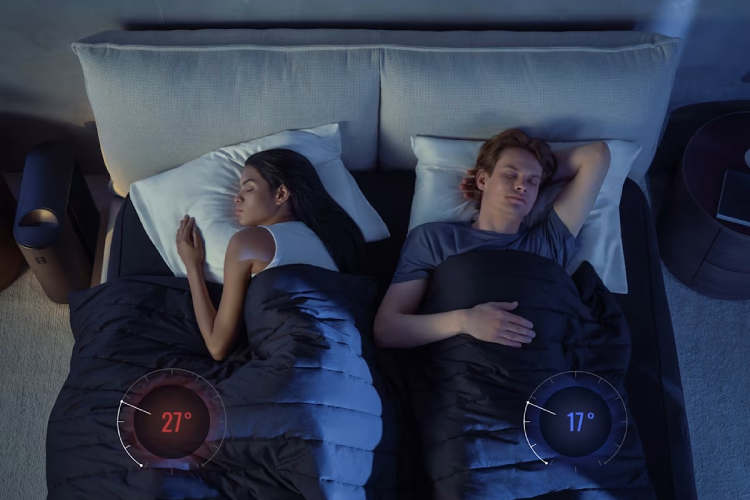
The partner temperature dynamic. Couples who’ve used the dual-zone system for six months consistently report that the thermostat negotiation simply ceases to exist as a household issue. It doesn’t come up. Both people have been sleeping at their optimal temperature for long enough that the old compromise temperature arrangement feels like a distant memory. Some couples report this as a more meaningful quality-of-life improvement than the sleep quality improvement itself — one source of low-grade household friction just gone.
The sleep elsewhere problem. After six months with the Pod 5, sleeping in hotels, at family homes, or in any environment without temperature management feels noticeably worse. Not dramatically — most people adapt fine — but there’s a quality of sleep that feels slightly off. The bed is the wrong temperature. The middle of the night is warmer than it should be. You’re doing more of the thermal management work yourself. This is the clearest evidence that the Pod 5 has been working all along.
The behavioral changes. Long-term users report behavior changes that happened gradually without deliberate effort — going to bed earlier because the app data showed better sleep quality with earlier bedtimes, drinking less alcohol because the HRV impact became visible in the data, managing evening stress better because they could see it showing up in their overnight metrics. These changes are individual and not universal, but they’re reported consistently enough to be worth mentioning. The visibility of data changes behavior in ways that willpower alone typically doesn’t.
The subscription is the most consistent long-term complaint. Not the amount — $17 to $25 per month is not a large number for most people who spent $2,000 on the hardware — but the principle. After six months, the subscription feels more normal than it did at month one, but the underlying objection doesn’t fully disappear. It’s an ongoing cost on top of a major purchase, and that friction is real even when the features are being used and valued.
App stability has improved significantly over Eight Sleep’s history but occasional connectivity issues still happen. The hub loses its WiFi connection, the app doesn’t sync properly for a night, you wake up to a missing sleep report. These are rare and usually self-resolving but they happen. Having a system that you’ve come to rely on for daily data means the occasional gap is more noticeable than it would be for a product you engage with less consistently.
The one hardware observation over time: some users report the hub running slightly louder at 12 to 18 months than it did when new. This appears to be related to mineral buildup in the water system if tap water has been used rather than distilled water. Users who’ve used distilled water from day one consistently report no noise change. This is one of the reasons the distilled water recommendation is worth taking seriously from the start.
After months of real use, the Eight Sleep Pod 5 holds up as one of those products that earns more trust over time rather than less. The initial novelty fades. The active attention to the product decreases. And the underlying value — sleeping at the right temperature every night, having a daily readout of recovery status, having the couple temperature problem simply not exist — becomes more integrated into daily life rather than less.
The people who regret buying it long-term are almost exclusively people who bought it hoping it would solve a sleep problem that isn’t temperature-related. For that group, the product delivered what it promised — temperature management — but it didn’t deliver what they actually needed. That’s a buying decision failure rather than a product failure.
The people who don’t regret it at month six are almost universally the people who bought it for the right reason — temperature was the problem, and this fixed it. That group is large enough, and consistent enough in their reporting, that the long-term case for the product is strong.