

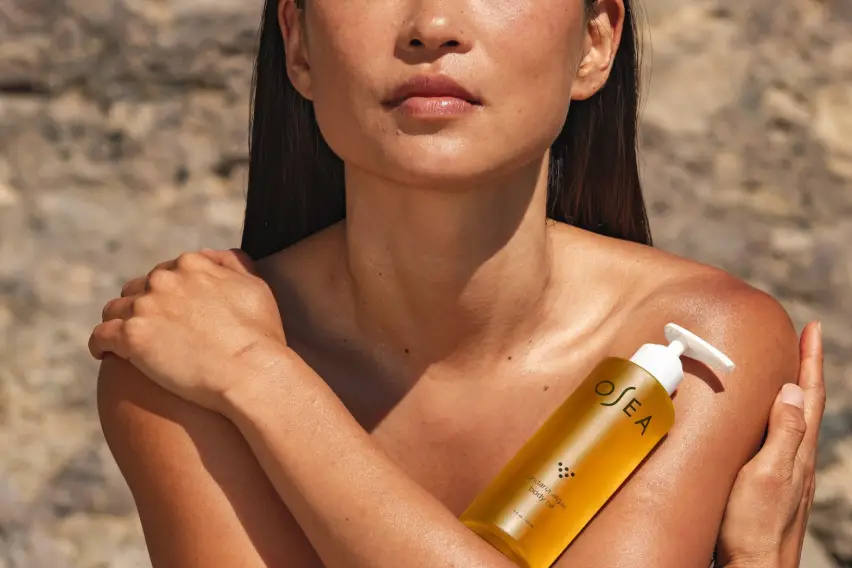
Osea Malibu has one product that deserves nearly all the praise it gets, and a lot of other products priced as though they deserved the same. The Undaria Algae Body Oil is excellent and externally corroborated: 4.7 out of 5 across nearly 4,000 Ulta reviews and a 2025 Allure Best of Beauty award, which is a genuine third-party endorsement rather than a brand claim. The rest of the line is harder to defend at $88 a serum, because the efficacy claims behind it rest on company-commissioned studies of about thirty people with no control group, and several of the brand’s green-beauty credentials turn out not to exist.
Fayes Homestyle Verdict Box
Category | Verdict |
Fayes Homestyle Score | 5.9 / 10 |
Best For | Buyers who want the Undaria Algae Body Oil specifically, and anyone drawn to seaweed-based formulations with a genuine coastal-California story |
Starting Price | Body oil roughly $50; cleansers roughly $48; serums $88 and up |
Standout Feature | Undaria Algae Body Oil, with 4.7/5 from 3,991 Ulta reviews and a 2025 Allure Best of Beauty award |
Biggest Catch | Headline claims rest on company-commissioned studies of about 31 people with no control arm, including a biologically implausible 100 percent after one use |
Ownership Note | General Atlantic made a growth investment on 16 September 2025. The company declined to confirm whether the stake is a majority, and the split is undisclosed |
Brand Snapshot, With Three Corrections
Osea was founded in 1996 in Malibu, California by Jenefer Palmer, and the name stands for Ocean, Sun, Earth, Atmosphere. The seaweed story is real: the brand’s formulations are built around algae, and Palmer’s connection to the material predates the current seaweed-skincare trend by decades. It is a vegan brand with a coherent formulation philosophy. It is also a brand whose publicly repeated facts need correcting in three places, because several of the things everyone knows about Osea are out of date or simply wrong.

Leadership
Melissa Palmer, Jenefer’s daughter, is frequently described as the current CEO. She is not. Erika Kussmann became chief executive on 5 November 2025, and Melissa Palmer moved to Chief Brand Officer. There is also no person named Jenni Palmer associated with the company, a name that appears in some secondhand coverage and does not correspond to anyone.
Ownership
General Atlantic announced a growth investment in Osea on 16 September 2025. Coverage sometimes describes this as an acquisition or a majority purchase. The actual position is narrower: the investment is confirmed, the ownership split is undisclosed, and when asked directly whether the stake was a majority, the company declined to confirm. The honest statement is that Osea took outside growth capital from a large private equity firm and has not disclosed how much of the business that represents.
Where You Can Actually Buy It
Osea is not sold at Sephora, which is a correction worth making because it is assumed constantly. It is sold direct and through Ulta, among other retailers.
The Certifications Osea Does Not Hold
This is the section that most affects how you should read the brand’s marketing, so here it is plainly. Osea does not hold EWG Verified status. It is not MADE SAFE certified. It is not a certified B Corporation. It is not Climate Neutral certified. Each of these is a specific, auditable third-party credential, and each is routinely attributed to Osea in roundups and affiliate content.
What the brand does have is a coherent internal standard: vegan formulations, no parabens or sulfates, a seaweed-led ingredient philosophy, and recyclable glass packaging on much of the range. That is a defensible position. It is just not the same thing as external certification, and the difference matters precisely because the clean-beauty category is where unverified claims do the most work.
The 2016 FDA Warning Letter
In 2016 the FDA issued Osea a warning letter over marketing claims that crossed from cosmetic into drug territory, meaning the language described the products as treating or affecting the structure or function of the body in ways that would require drug approval. This is a common category of enforcement in skincare and it is not evidence of a safety problem. It is evidence that the brand’s claims had, at least once, outrun what it could legally say, which is a pattern worth keeping in mind when reading the efficacy numbers below.
The Clinical Claims, Examined
Osea publishes percentage results for its higher-priced products, and the numbers look impressive until you read the methodology.
Claim type | What the study actually was | Problem |
Hydration and firmness percentages | Company-commissioned consumer studies, roughly n=31 | No control arm, so no way to separate the product from moisturising anything |
100 percent after one use | In-house self-reported result | Biologically implausible as stated, and a 100 percent figure from 31 self-reports is not a finding |
Hydration increase figure | Published by Osea itself | The brand’s own site publishes both 61 percent and 161 percent for the same measure |
Take the last one on its own terms. A brand that publishes two different numbers, 61 percent and 161 percent, for the same hydration result on its own website has not made a small typographical error. It has demonstrated that nobody is checking the numbers before they go out. That is the clearest available signal about how much weight the other percentages deserve.
None of this means the products do not work. Pleasant, effective moisturisers are easy to make and seaweed extracts are genuinely good humectants. It means that the evidence offered to justify an $88 price is not evidence of the kind it is presented as, and that a buyer paying that price is paying for formulation philosophy, scent, texture and packaging rather than for demonstrated superiority.
Product Deep Dive
Undaria Algae Body Oil: The Genuine Standout
At roughly $50 this is the product that justifies the brand’s reputation, and unusually, the evidence for it is external rather than self-reported. It carries 4.7 out of 5 across 3,991 reviews at Ulta, which is a sample size large enough to mean something, and it won a 2025 Allure Best of Beauty award, which is an independent editorial judgement rather than a brand claim. The texture, absorption and scent draw consistent praise, and the seaweed base is the formulation doing actual work here. If you buy one Osea product, this is it.
Cleansers
At roughly $48, the cleansers are expensive for what a cleanser does, which is sit on your skin for forty seconds and then leave. They are well formulated and pleasant. They are also the category where premium pricing buys the least, because contact time is short by design. Reviews are solidly positive without being remarkable.
The $88 Serums
This is where the gap between price and evidence is widest. The formulations are competent and the sensory experience is good. But the clinical support is the n=31 no-control-arm material described above, and at $88 you are competing against serums with published, peer-reviewed, controlled data on specific actives at a third of the price. If seaweed-led formulation and the brand’s philosophy matter to you, the premium is a preference you are entitled to pay for. If you are buying on demonstrated efficacy, this is not where the evidence points.
“The body oil is worth every penny, the serums less obviously so” — Representative buyer theme, cross-referenced across retailer review aggregation
Pros and Cons
Pros
- The Undaria Algae Body Oil is genuinely excellent, with 4.7/5 from 3,991 Ulta reviews and a 2025 Allure Best of Beauty award
- A real 1996 founding story and a seaweed-led formulation philosophy that predates the trend by decades
- Vegan throughout, free of parabens and sulfates, with recyclable glass packaging across much of the range
- Pleasant textures and scents, and consistently positive reviews across the broader catalogue
- Widely available through Ulta as well as direct, so you can often see and smell products before buying
Cons
- Does not hold EWG Verified, MADE SAFE, B Corp or Climate Neutral certification, despite all four being commonly attributed to it
- Headline efficacy claims come from company-commissioned studies of roughly 31 people with no control group
- The brand’s own site publishes two contradictory figures, 61 percent and 161 percent, for the same hydration result
- A 2016 FDA warning letter over unapproved drug claims shows the marketing language has outrun the law at least once
- $88 serums and $48 cleansers compete against better-evidenced products at a fraction of the price
How Osea Compares
Brand | Serum price band | Evidence basis | Certification position |
Osea Malibu | $88 and up | In-house, roughly n=31, no control arm | Internal standards only |
The Ordinary | $8 to $20 | Published literature on named actives | Minimal marketing claims |
Paula’s Choice | $30 to $60 | Cites peer-reviewed research per ingredient | Transparent ingredient rationale |
Youth To The People | $48 to $98 | Mixed in-house and ingredient literature | Certified B Corporation |
Who Should (and Shouldn't) Buy Osea
Good Fit: Body Oil Buyers and Seaweed Believers
Buy the Undaria Algae Body Oil without hesitation; it is the rare prestige product with independent corroboration behind it. And if the seaweed philosophy, the coastal-California story and the sensory experience are what you are shopping for, Osea delivers those genuinely.

Weak Fit: Evidence-Led Buyers and Certification Checkers
If you choose skincare on controlled clinical data, the $88 serums are not where the data is. And if you are shopping specifically for EWG Verified, MADE SAFE, B Corp or Climate Neutral products, Osea does not qualify for any of the four, whatever a roundup told you.
Our Top Pick in the Lineup
Undaria Algae Body Oil, at roughly $50. It is the only product in the range whose quality is established by something other than the company that sells it, and both the review volume and the Allure award point the same way.
Pricing and Where to Buy
Osea sells direct and through Ulta and other retailers. It is not at Sephora. Buying through a retailer gives you a returns process and, at Ulta specifically, the review volume that makes the body oil’s track record visible. The brand discounts periodically, and a $50 body oil on promotion is the clearest value in the catalogue.
Frequently Asked Questions
Is Osea EWG Verified or MADE SAFE certified?
No, to both, and it is also not a certified B Corporation or Climate Neutral certified. All four are frequently attributed to the brand in roundups and affiliate content. Osea operates to its own internal standards, which are coherent but not externally audited.
Who owns Osea Malibu?
General Atlantic made a growth investment announced on 16 September 2025. The ownership split is undisclosed, and the company declined to confirm whether the stake is a majority. Erika Kussmann became CEO on 5 November 2025, with Melissa Palmer moving to Chief Brand Officer.
Is the Undaria Algae Body Oil worth the money?
This is the one product where the answer is a clear yes. It holds 4.7 out of 5 across 3,991 Ulta reviews and won a 2025 Allure Best of Beauty award, which is independent of the brand’s own marketing.
Are the clinical results Osea publishes reliable?
Treat them cautiously. They come from company-commissioned studies of roughly 31 people with no control arm, one headline figure claims 100 percent after a single use, and Osea’s own site publishes both 61 percent and 161 percent for the same hydration measure.
Is Osea sold at Sephora?
No. It is sold direct and through Ulta, among other retailers, but not at Sephora.
Fayes Homestyle Scorecard
Category | Score |
Star Product Quality | 9.0 / 10 |
Value Across the Range | 5.0 / 10 |
Claim Accuracy | 3.5 / 10 |
Transparency and Certification | 4.0 / 10 |
Overall Fayes Homestyle Score | 5.9 / 10 |
Final Verdict
Osea Malibu is a brand with one genuinely great product and a marketing apparatus that asks you to extend that product’s reputation across a $48-to-$88 catalogue. The Undaria Algae Body Oil earns its praise, and the external corroboration behind it, nearly 4,000 Ulta reviews averaging 4.7 and a 2025 Allure Best of Beauty award, is the kind of evidence the rest of the line conspicuously lacks. Elsewhere the picture is thinner than the price suggests: four green-beauty certifications the brand does not hold but is constantly credited with, a 2016 FDA warning letter over claims that crossed into drug territory, efficacy percentages drawn from roughly thirty self-reports with nothing to compare them against, and a hydration figure the company’s own website publishes two contradictory versions of. Buy the body oil. Treat everything above $80 as a preference purchase, not an evidence-based one.
What do you think?