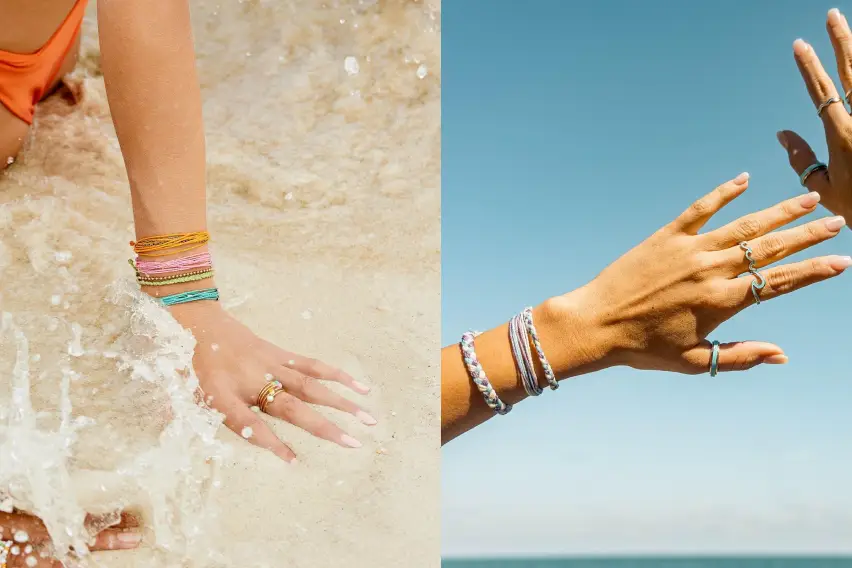
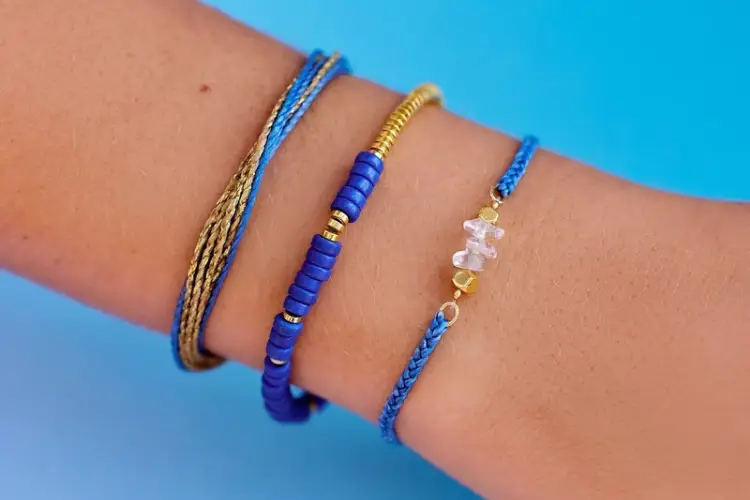
Pura Vida sells $8 string bracelets and has a Trustpilot average of 3.6 across more than 45,000 reviews, which tells you most transactions go fine. The two things worth knowing before you buy are less visible. First, the brand publicly conceded in 2018 that its Costa Rica and handmade marketing had misled customers, and its current artisan language quietly concedes the same point while still invoking the original story. Second, and more striking: Vera Bradley spent roughly $104 million acquiring this business between 2019 and 2023, wrote off about $81 million of it, and sold it in March 2025 for $1 million.
PickSuperb Verdict Box
Category | Verdict |
PickSuperb Score | 5.2 / 10 |
Best For | Buyers who want genuinely cheap, colourful costume jewellery and are ordering a one-off rather than subscribing |
Starting Price | Core string bracelets $8; braided $10-15; charms $8-16; rings $16-40; Monthly Club from $11/mo |
Standout Feature | Genuinely low entry pricing with a very large Trustpilot sample (45,249 reviews at 3.6/5), which is real evidence that the typical order goes fine |
Biggest Catch | In April 2018 Pura Vida emailed customers conceding its marketing “may have led people to think all products were hand-made solely by local Costa Rican artisans,” and offered refunds |
Reputation Note | No CPSC recall, no FTC action and no data breach found, which matters in a jewellery category where lead and cadmium recalls are common. But BBB rates it B-, not accredited, with a 2.45/5 customer average |
The products are cheap, the legal record is genuinely clean, and most orders arrive fine. The honest catch is a brand whose central marketing story was publicly corrected, whose charitable and artisan claims carry no independent audit, and whose commercial collapse is a matter of public record in its former parent’s SEC filings.
Brand Snapshot, and a Disambiguation
First, the disambiguation, because several unrelated businesses share this name. This review covers Pura Vida Bracelets at puravidabracelets.com, operating as Creative Genius, Inc., based in La Jolla, California. It is not Pura Vida Coffee, not the Pura Vida Miami restaurant group, and critically not Pura Scents, the smart-diffuser company that had an actual CPSC recall in 2025 over a magnet ingestion hazard. Searches for “Pura Vida recall” surface that recall; it has nothing to do with the bracelets.
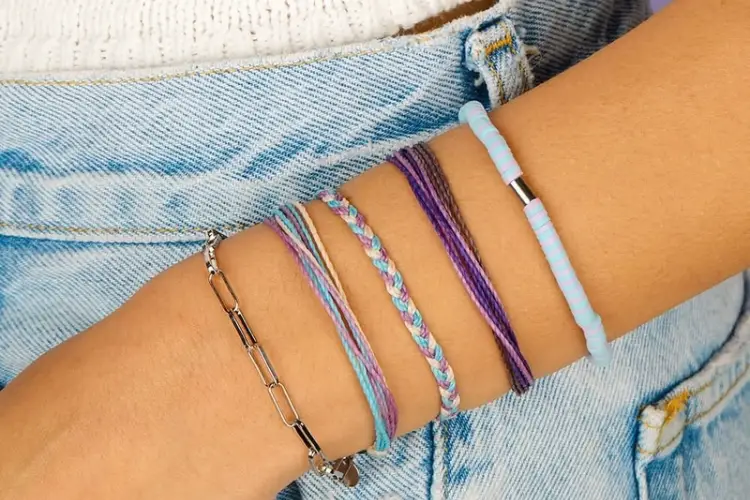
Pura Vida was founded in 2010 by Griffin Thall and Paul Goodman, two San Diego State graduates. The origin story is well documented: after graduating they travelled to Costa Rica, met two bracelet makers, bought 400 bracelets for $100, brought them home and sold them through a Malibu boutique. “Pura vida” is Costa Rica’s colloquial slogan, roughly “pure life.” The brand grew enormously on micro-influencer and affiliate marketing, reaching $68.3 million in revenue in 2018.
The Ownership Story, Which Is the Headline
Vera Bradley announced in June 2019 that it was buying 75 percent of Pura Vida for $75 million cash plus an earn-out of up to $22.5 million, closing that July. The earn-out was paid: $18.7 million, visible in Vera Bradley’s cash-flow statements. In January 2023 Vera Bradley bought the remaining 25 percent for $10 million. Total outlay is therefore roughly $104 million.
That figure is worth getting right, because trade press widely reports the total as $85 million, omitting the earn-out that SEC filings show was actually paid. We are citing the filings.
What Happened Next
Fiscal year | Pura Vida impairment | Pura Vida revenue |
FY2022 (peak) | — | $119.6M |
FY2023 | $69.3M (goodwill written to zero) | $98.4M |
FY2024 | $5.4M | $87.1M |
FY2025 | $6.2M (all remaining intangibles) | $53.2M |
Total | ~$80.9M written off | −55.5% from peak |
The stated cause throughout was the collapse of paid-social economics, described in filings as the shift in social and digital media effectiveness and escalating digital media costs. Trade coverage attributes this specifically to Apple’s App Tracking Transparency privacy changes, which made Facebook and Instagram targeting far harder and costlier, and that was precisely the channel Pura Vida’s growth had been built on.
In March 2025 Vera Bradley signed an agreement to sell 100 percent of the business for $1 million plus possible contingent payments, closing on 31 March 2025 and booking a $15.2 million loss on the sale. Net cash proceeds were $903,000. In June 2025 the buyer was publicly identified as affiliates of CriticalPoint, a Los Angeles private investment firm. So the honest summary is that Pura Vida was sold rather than wound down, is still trading, and changed hands at roughly one percent of what was paid for it. The founders left in January 2023; the current CEO is Ryan Heuser, previously of Paul Frank.
Why this matters to a buyer rather than an investor: a brand under new private-equity ownership, with a new CEO, a sharply reduced product range and pricing explicitly described as a growth lever, is a brand where prices, product mix and service standards are actively in flux. That is context, not an accusation.
Pros and Cons
Pros
- Genuinely cheap: core string bracelets at $8, with frequent bundle discounts taking multi-packs well below list
- A very large Trustpilot sample (45,249 reviews, 3.6/5) which is real evidence that the typical transaction completes fine
- No CPSC recall, no FTC action, no lawsuit against the company and no data breach found, in a category where lead and cadmium recalls are common
- Self-service online subscription cancellation with free pausing and skipping, which is not a dark-pattern “call us to cancel” setup
- B Corp certified in February 2022 with a score of 84.2, above the 80 threshold
Cons
- In April 2018 the company emailed customers conceding its Costa Rica and handmade marketing may have misled them, and offered refunds
- Current artisan language says “partner factories” in six unnamed countries, while still invoking “the same Costa Rican artisans”
- The $5M charitable giving claim carries no per-item rate, no percentage and no third-party audit anywhere we could find
- Monthly Club boxes are marked final sale with no returns, and prepaid annual plans have reportedly been refused refunds even before shipping
- The brand’s own affiliate page advertises “up to 12%” commission while the live network program pays 2% to ordinary affiliates
The Costa Rica Marketing, Stated Precisely
Two lawsuits were filed in 2017. In August, a former director of supplies sued for fraud, alleging the bracelets came from El Salvador rather than Costa Rica and had done so since at least 2015. In December, a customer filed a putative class action in San Diego Superior Court alleging the Costa Rica claims appeared across the website, social media and the packaging, and were false.
We could not find a reported final disposition for either case, so we are not stating an outcome. What is fully documented is what the company did next. In April 2018 Pura Vida emailed customers acknowledging that its marketing, packaging or advertising may have led people to think all products were hand-made solely by local Costa Rican artisans and that purchases supported full-time artisan jobs only in Costa Rica. It conceded a customer’s bracelet may not have been hand-made by local artisans in Costa Rica, said products are made, assembled and distributed in several countries including Costa Rica, El Salvador and India, changed its website language, and offered full refunds to customers unhappy about where their product was made.
The current language is worth reading against that. The brand still says it works with the same Costa Rican artisans it met at the beginning, but also that without exception everything it makes comes from sustainable partner factories that ethically employ workers in six countries. Factories, in six unnamed countries, with no artisan headcount, no pay figures and no audit published. The homepage no longer uses the words handmade or Costa Rica at all. That is a quiet concession of the 2018 point, and it is fair to say so.
“The bracelet arrived quickly and looks exactly like the photo, but the gold charm had tarnished within a few weeks” — Representative quality complaint theme, cross-referenced across BBB and Trustpilot reviews
The Monthly Club and the Refund Problem
The Monthly Club runs at $14.95 a month, $39 for three months, or $132 for twelve, charged on the 7th of each month. Cancellation is genuinely self-service through your account, described as free and no-questions, with pausing and skipping available at no charge. Credit where it is due: that is a reasonable policy on paper.
The criticism is narrower and fairer. The club is marked final sale with no returns or exchanges, and you must act before the 7th to avoid that month’s charge. Miss it by a day and you have paid for an unreturnable box. The prepaid tiers are where the real exposure sits: one documented complaint describes a customer who cancelled a twelve-month prepaid subscription before the first box shipped and was told it was non-refundable. Others describe charges continuing after cancellation and an unexpected $49 duties-and-taxes bill on delivery.
One unresolved point we would check before subscribing: the product page we read advertises five bracelets per box, while the November 2026 box as documented by a subscription-review site contained three, and historical listings also say three. Either the page is stale or there are multiple tiers; check the live page on the day you order.
More broadly, the single most consistent complaint across every platform is that refunds arrive as store credit rather than money, including for items that were out of stock and never shipped. One BBB reviewer recovered funds only by disputing the charge with their bank. Combined with the final-sale terms on subscriptions and discounted bundles, that is the most substantive consumer-protection concern in the record.
What the Review Scores Actually Show
Platform | Score | Sample size |
Trustpilot | 3.6 / 5 | 45,249 reviews (16% one-star) |
BBB rating | B-, not accredited | 49 complaints in 3 years, 2 in last 12 months |
BBB customer reviews | 2.45 / 5 | 71 reviews |
ComplaintsBoard | 2.3 / 5 | 15 complaints, 14 reviews |
Sitejabber | 3.1 / 5 | 5 reviews — too thin to cite |
The gap between 3.6 across 45,249 reviews and 2.45 across 71 is the real story, and it is not a contradiction. A high-volume, merchant-claimed, invitation-driven profile measures the average transaction. Low-volume complaint destinations measure what happens when something goes wrong. Both are accurate about different things, and the honest reading is that ordering from Pura Vida usually works, while needing support from Pura Vida frequently does not. Trustpilot’s own 16 percent one-star share under a 3.6 average supports that bimodal shape.
Of the 49 BBB complaints in three years, 24 concerned delivery: orders stuck in processing for weeks, dead tracking, packages never arriving, and postage-due notices. Fourteen were service or repair issues, including tarnishing, a ring that fell apart within days and a necklace clasp that would not open. Five concerned customer service specifically, though bot-first support and slow generic replies feature as an aggravating factor in most of the others.
The Affiliate Program Discrepancy
This one is worth flagging because it is concrete and checkable. Pura Vida’s own affiliate FAQ page advertises commission of up to 12 percent. The live affiliate program on the network that now runs it offers 2 percent as standard, with up to 15 percent reserved for designated content partners, on a 30-day cookie. At an average order value around $40, 2 percent is about 80 cents per sale against a $50 payout threshold paid by cheque.
Separately, the agency managing the program has publicly described deliberately shifting the partner mix away from content publishers toward coupon, deal and loyalty partners, and saving $19,000 in publisher commissions. None of that is unlawful, and we found no FTC action against Pura Vida of any kind. But a brand whose growth was built on thousands of micro-influencers, whose public affiliate page overstates the current rate by six times, and whose affiliate terms make no mention of FTC endorsement-disclosure requirements, is fairly described as having let its public-facing information drift.
Charitable and Artisan Claims
Pura Vida says it has donated over $5 million to social and environmental causes across fourteen years, and its products carry charity-partner badges for ocean conservation, pet rescue, rainforest and cancer causes, with Surfrider Foundation named as a partner. What is not disclosed anywhere we could find is the per-bracelet donation amount, the percentage of sales or profit, a recipient-by-recipient breakdown, or any third-party audit of the $5 million figure. The model is described as a portion of sales going to the named charity, with the portion unspecified. For a brand built on cause marketing, that is a substantive transparency gap.
On B Corp status, one caveat matters. Pura Vida is listed as certified in February 2022 with a score of 84.2, above the 80 threshold. B Corp certification normally runs on a roughly three-year recertification cycle, and since February 2022 the company has changed ownership twice and changed CEO, all events that would normally trigger review. We could not confirm the certification is current, so the accurate phrasing is that it certified in 2022 with that score, with current recertification status not publicly confirmable.
Who Should (and Shouldn't) Buy
Good Fit: One-Off Buyers of Cheap Costume Jewellery
At $8 a bracelet, with a large review sample showing most orders arrive fine, a single purchase is low-risk and the designs are genuinely colourful. Just treat it as costume jewellery, because tarnishing is the single most repeated quality complaint.
Weak Fit: Subscribers and Cause-Driven Buyers
The Monthly Club’s final-sale terms and the documented difficulty getting actual money back rather than store credit make the subscription the riskiest way to engage. And if you are buying specifically because of the artisan or charitable story, the brand’s own 2018 correction and its current unaudited figures mean that story should not be the deciding factor.
Our Top Pick in the Lineup
The $8 core string bracelet is the pick, simply because it is the product where price and expectation line up honestly. At that price, a bracelet that lasts a season is a fair deal; at $40 for a gold-finish ring, the tarnishing complaints matter a great deal more.
Pricing and Where to Buy
Pura Vida sells through its own site and six company-owned stores, with new stores planned for 2026. Note that the EU site shut down and international shipping stopped in February 2024, so non-US buyers face duties and limited support. The new ownership has explicitly described pricing as a growth lever with tiered price points, so check current prices rather than relying on any figure quoted in an article, including this one.
Frequently Asked Questions
Are Pura Vida bracelets actually made in Costa Rica?
Not all of them, and the company has said so. In April 2018 it emailed customers conceding its marketing may have misled them into thinking all products were handmade solely by Costa Rican artisans, and said products are made in several countries including Costa Rica, El Salvador and India. Its current language refers to partner factories in six unnamed countries.
Is Pura Vida still owned by Vera Bradley?
No. Vera Bradley sold the business on 31 March 2025 for $1 million, booking a $15.2 million loss, after writing off roughly $81 million in impairments. It is now owned by affiliates of CriticalPoint, a Los Angeles private investment firm, with a new CEO and the founders gone since January 2023.
Is the Pura Vida Monthly Club easy to cancel?
Cancellation itself is self-service through your account and is free, with pausing and skipping available. The catch is timing and refunds: you must cancel before the 7th of the month, boxes are final sale with no returns, and prepaid annual subscribers have reported being refused refunds even before a box shipped.
Have Pura Vida bracelets ever been recalled?
No CPSC recall was found for Pura Vida Bracelets, which is genuinely worth noting in a jewellery category where lead and cadmium recalls are common. The recall that surfaces in searches belongs to Pura Scents, an unrelated fragrance-diffuser company.
Do Pura Vida bracelets tarnish?
Tarnishing is the single most repeated quality complaint across BBB, Trustpilot and ComplaintsBoard, alongside breakage. The brand publishes no substantive material disclosure for its core products, no fibre content for the string and no base metal or plating thickness for the charms.
PickSuperb Scorecard
Category | Score |
Price and Entry-Level Value | 8.0 / 10 |
Marketing Claim Accuracy | 3.0 / 10 |
Refund and Support Experience | 3.0 / 10 |
Safety and Regulatory Record | 8.5 / 10 |
Overall PickSuperb Score | 5.2 / 10 |
Final Verdict
Pura Vida sells cheap, colourful bracelets, most orders arrive without incident across a genuinely enormous review sample, and its safety and legal record is clean in a category where that is not guaranteed. The honest catch is everything around the product. The brand’s founding story was publicly corrected by the company itself in 2018 and its current artisan language quietly concedes the point; the charitable claims carry no audit; refunds routinely arrive as store credit rather than money; the subscription is final sale with a one-day-a-month cancellation window; and the commercial reality, visible in SEC filings, is a business bought for roughly $104 million and sold for $1 million. Buy a bracelet if you want a bracelet. Do not buy the story, and think twice before subscribing. For another honest look at a design-led brand acquired at a high price and later written down, see our Great Jones review.
What do you think?